11 questions with Invisible Flock
For my latest interview, I’m thrilled to have been able to talk to Invisible Flock, the award-winning interactive arts studio based at Yorkshire Sculpture Park. The group operates at the intersection of art and technology and are artist led. Working from a sustainable laboratory space, they provide a fantastic residency programme and invest their time in some of the most mesmerising sensory installations and environments to “renegotiate our emotional relationship to the natural world”. Take a look at Invisible Flock’s wonderful response as part of their 11 answers kindly sent my way by Invisible Flock's Technical Director Ben Eaton.

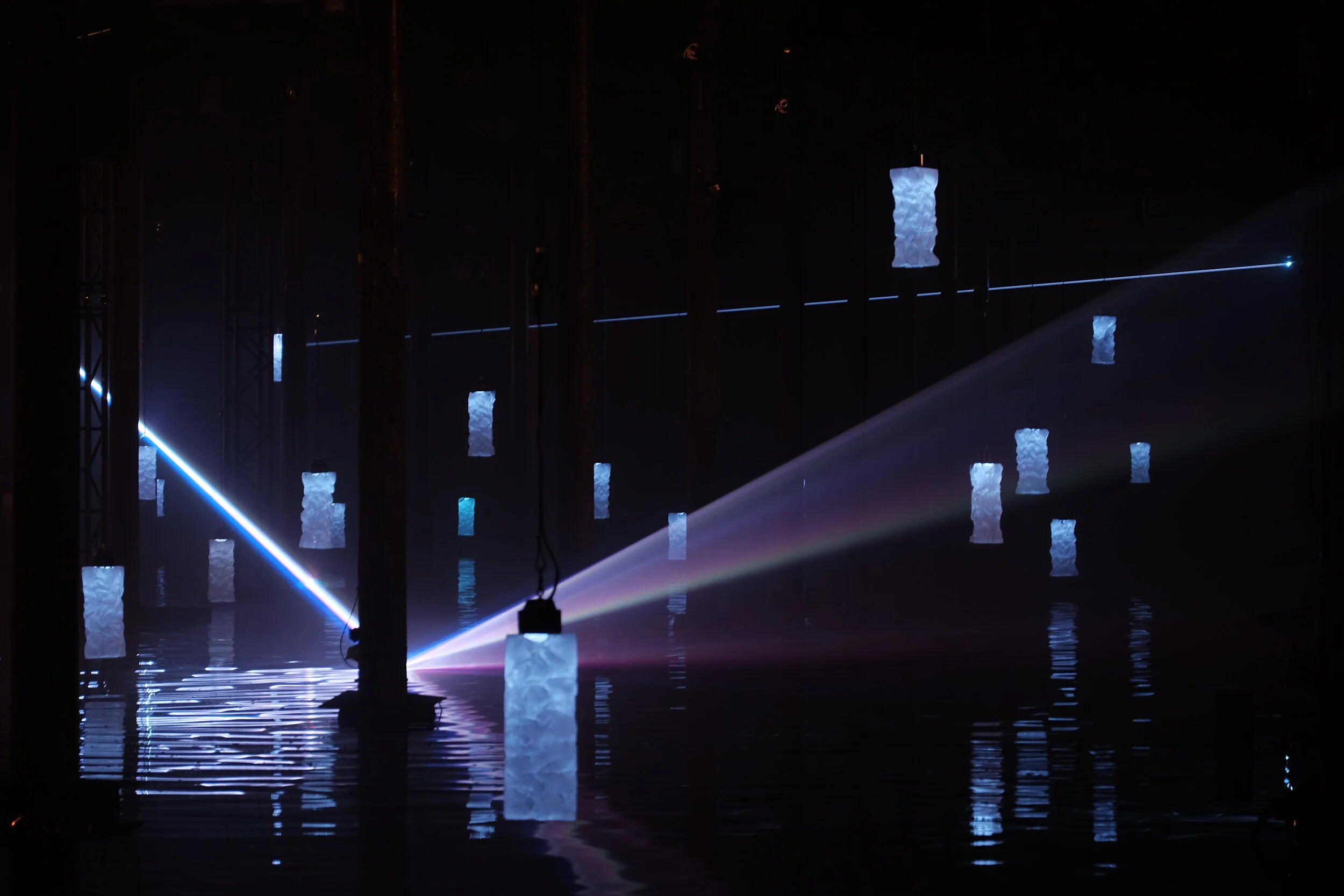
Image: Aurora, an elemental installation made for the iconic Toxteth Reservoir in Liverpool, by Invisible Flock in collaboration with Miebi Sikoki & Rudi Nurhandi (Digital Nativ, Indonesia), Babitha George & Romit Raj (Quicksand, India), Abshar Platisza (Indonesia), Azusa Ono (Japan/UK), Bagus Pandega (Indonesia), Etza Meisyara (Indonesia), James Hamilton (UK) and Simon Fletcher (UK).
For my latest interview, I’m thrilled to have been able to talk to Invisible Flock, the award-winning interactive arts studio based at Yorkshire Sculpture Park. The group operates at the intersection of art and technology and are artist led. Working from a sustainable laboratory space, they provide a fantastic residency programme and invest their time in some of the most mesmerising sensory installations and environments to “renegotiate our emotional relationship to the natural world”. Take a look at Invisible Flock’s wonderful response as part of their 11 answers kindly sent my way by Invisible Flock's Technical Director Ben Eaton.
How did Invisible Flock originate?
We began 12 + years ago making installation heavy interactive experiences for audiences. We’d come out of an installation theatre and live art world and were primarily focussed on technology and interaction and bringing audiences into the work in new and experiential ways. In that time the team has expanded, Ben and Victoria were joined by Catherine and later Klavs and our expanded universe of friends and collaborators slowly coalesced. Although I think you could still find grains of what we are now as a studio, even in our very first scrappy pieces, in a way I think the studio as it now exits became the most recognisable when we began to work internationally as I think the scope and tone of the work shifted then to what we are now.
What does it mean to you to be artist led?
For us it remains about the proximity to the work, having a belief that the mechanics by which a piece of work is brought about and the stuff that gets decided around the office table is as important to the practice as the work that happens in the workshop or in R&D. Simply it means that our focus is always on the practice and the studio’s choices are always focussed on how to best protect, nurture and grow it.
Why are you interested in interactive and participatory art?
We have always been interested in dissolving the barriers that often sit surrounding culture, those of physical space, time, lines between audience and creator, formalised or informalised participation. We live in a time where technology allows us to create and imagine new forms of interaction and participation all the time, and it's not only an exciting time for artists in that respect but it is also beholden to them to be part of this conversation. It is even more crucial to be re-imagining what it means to be an audience, or a participant in this distributed technological age before the slow inevitable creep of monetisation and commercialisation completely overtakes what could be incredible and beautiful means of communication.
How does Invisible Flock relate to nature?
Deeply. All of our practice is rooted within it. It has been our explicit sole focus as a studio for the past 5 years. We moved our studio out of the city last year and most of our collaborators and projects involve working directly with ecosystems that are at risk or people living on the edge of environmental collapse. Both our artistic output as a studio and also our research and thinking is around developing new and critically in depth techniques to consider our place within nature.
What’s Invisible Flock's one message to the world?
We’ve never been very good at slogans which i think is part of why we make art.
What's Invisible Flock's approach to new technologies?
Critical and suspicious whilst remaining always open to its possibilities. We think of technology as a tool and get excited about what it allows us to do, but this does not mean that the tech itself has to be brand new, rather it can be new to us, or be suddenly accessible to us due to some newly acquired knowledge. But technology is a violent and destructive force the downstream effects of which are often far removed from us and our audiences. We try and exist beyond consumer level tech and gadgets and instead have a more critical approach to the full vocabulary of a technology, which involves considering its lifespan, how fully it can articulate an idea, how much it allows us to use it expressively as artists rather than as physical extensions of the object’s original developer’s vision.
How has Invisible Flock changed over the last decade?
We are a tight and small team of people so we have changed as much as anyone does in a decade, ie quite a lot and not at all at the same time. We have been incredibly fortunate to work with some brilliant colleagues around the world and to undertake some incredible projects and work and this has allowed us to arrive at a place where we are able to look at our work and the wider industry with an amount of calm and reflectiveness. We strive to be in control of our work, take the time to think things through deeply and run our organisation with kindness openness and integrity.
What are some of your current projects?
We are taking part in some long form projects at the moment, partly driven by the pandemic but also by choice, we have been collating year long audio recordings in the arctic circle with some remote field recorders we invented. We are re-developing a piece of work that was shown in Indonesia two years ago that creates a series of tangible and kinetic sculptures all drawn from a series of endangered landscapes. We also have a large project that came out of months of recordings of the jungle in Sumatra just before the pandemic hit that brings audiences into the rhythms of the life of Siamang gibbons in the jungle.
What are Invisible Flock's ambitions for the next decade?
We are making an interesting new move into research at the moment and are working hard so that our work and practice has real world impact so that will be an exciting new direction. Other than that I hope like the last decade to have changed a lot and not at all and to still be making work that is relevant and useful and a net positive for the environment, audiences and my immediate community.
What's the one object Invisible Flock would bring to a desert island?
A field recorder. Seeing as no matter where I am every time I try and record nature some kind of human noise always shows up eventually I would only need to start recording to be sure to be rescued. But if I wasn’t rescued then I would want to capture that silence before it disappears.
What's your one piece of advice to aspiring artists?
There’s no one way to do it, or one definition of practice.
Thank you for reading. Stay tuned for more 11 questions (and answers) from artists, makers and creatives coming your way soon. Never miss an issue by subscribing to my mailing list, and in the meantime feel free to take a look at my blog and some of my work as an artist.
11 questions with James Aldridge
This month, I spoke with contemporary artist James Aldridge about his interest in climate and biodiversity, participatory art, the Climate Museum UK, and some of his most newest projects, including Queer River.

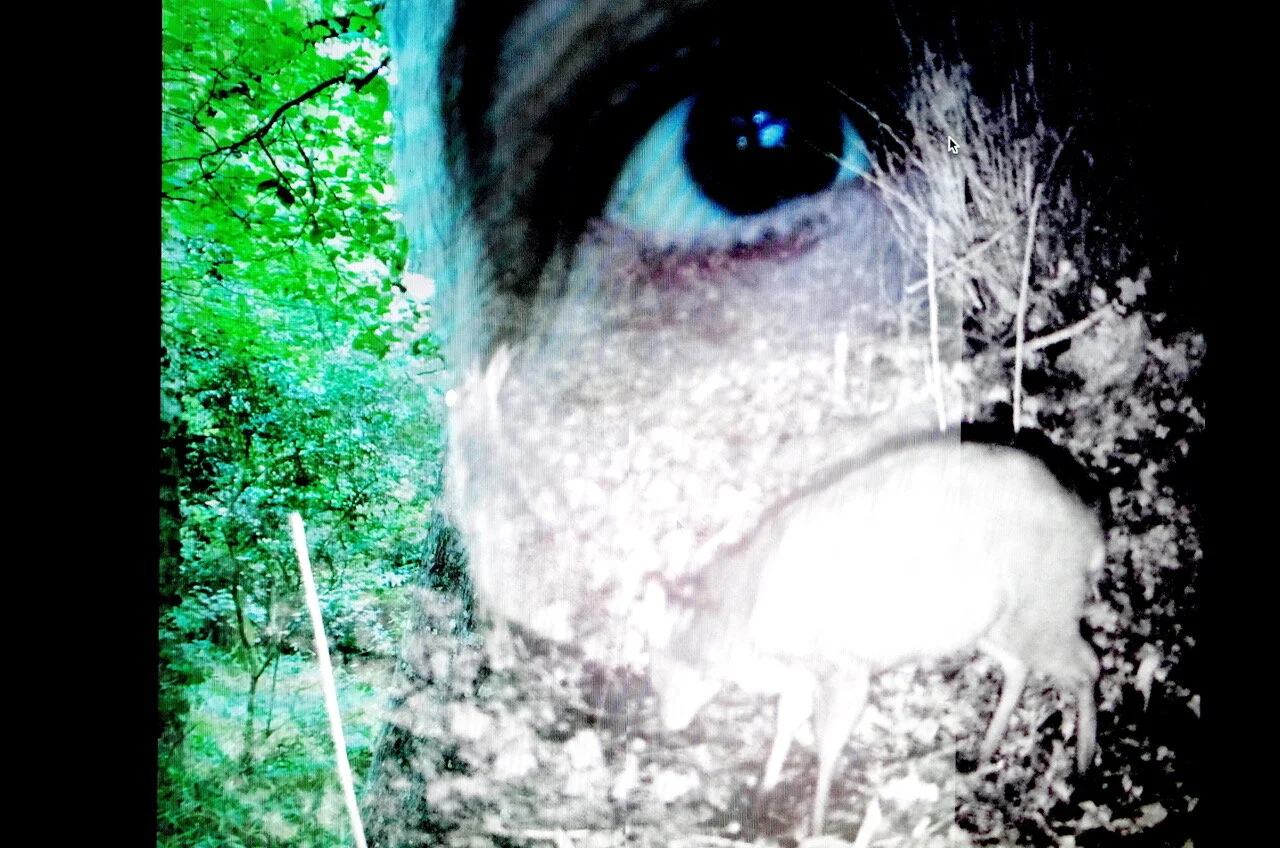
The Eye of the Forest (James Aldridge)
This month, I spoke with contemporary artist James Aldridge about his interest in climate and biodiversity, participatory art, the Climate Museum UK, and one of his newest projects, Queer River. Take a look!
1. How would you describe your arts practice?
My practice focuses on using visual arts processes to set up a dialogue between myself and other people, animals, plants and places. I’m interested in the value of such processes for the development of ways of being with each other, that are based on interconnection, and individual/planetary wellbeing.
2. Where does your interest in climate and biodiversity come from?
I’ve always used art as a way of exploring the relationship between humans and other beings. So as the magnitude of the current earth crisis became apparent, it made sense for me to be more explicit, advocating for arts practices that engage communities in talking about the crisis, and taking action to mitigate its effects.

Walking Pages (Stanton St Bernard)
3. What are your interests in interactive and participatory art?
My work combines individual, collaborative, and socially engaged practices. During my career I’ve worked with a wide range of organisations, and participants from babies to PhD students, researching the value of art within learning, and more specifically within outdoor and place-based learning. I see art as a living, breathing process, with art objects as evidence of that process.
4. What's your relationship with nature?
That's a bit of a tricky one… the word ‘nature’ itself is difficult for me. It is used by lots of people who are doing really positive work and inspiring others to do the same, and yet for me it perpetuates the idea of there being a human/nature split, an ‘us and them’.
Obviously when people are talking about ‘saving the environment’ or ‘being in nature’, their intentions are good, but they are acting from the same position that allows us to use and abuse ‘nature’, a belief that we are somehow separate. I believe that we are ‘nature’, and that sometimes art can give us an opportunity to experience that interrelationship, our indivisibility. Having said all that, I appreciate it’s not always easy to find another word to use.
5. What is the Climate Museum?
Climate Museum UK is a mobile and digital museum, a distributed museum consisting of a team of artists, designers, curators and others, based around the UK, who work together to enable other organisations and communities to talk about and take action on the earth crisis.
Climate Museum UK was set up by Founding Director Bridget McKenzie, and I was invited to join the team as an Associate about 18 months ago. During my time with CMUK I’ve worked with the Hayward Gallery to run workshops for children and teachers at the Among the Trees exhibition in early 2020, and developed online events and resources in collaboration with other team members. (Climate Museum is a different museum based in New York).

CMUK Workshop at Hayward Gallery
6. What is Queer River?
Queer River is an arts-based research project that I’ve set up to explore my and others experiences of and perspectives on rivers. I’m interested in how Queer perspectives, that sit across or outside of binary divisions such as masculine/feminine, can enable us to see beyond other boundaries such as human/nature or water/land, can provide us with new ways of seeing and being with rivers.
During the length of the Queer River project I will be walking, talking and making with other artists, writers, researchers and members of the LBGTQ+ community, along two rivers that start their journey near to my home in Wiltshire, the Hampshire Avon and the Bristol Avon. Together we will explore the intersection between our experiences, our practices and our ways of knowing rivers. From there I’m planning on widening the work to include other rivers and river ‘experts’.

Queer River, Paper Boat
7. What materials do you work with?
I like to allow the subject matter to inform the materials that I use. Often I am documenting my experiences of different places, and to do this I use sound, video, drawing, writing or photography, or make one of my Walking Bundles, from materials gathered along the way. Commissioned or other exhibited work can take the form of video or photographic pieces, sculptural installations, or writing, and much of my work is participatory in some way.

Walking Bundles (Doll Bodies)
8. What's one of the most memorable projects you've ever worked on?
The Interbeing exhibition that I set up at Pound Arts in Corsham in early 2020 was an important experience for me for both professional and personal reasons. It was the first exhibition that I had been involved in since a period of professional development supported by an A-N bursary, including mentoring from Rosalind Davis, and it was the first time that I had exhibited with my husband, the artist Jonathan Mansfield.
Together we set up an exhibition that explored the concept of Interbeing, as developed by Thich Nhat Hanh, and ran events to engage people in discussion around the themes of the exhibition. It’s that kind of approach that excites me, one that combines research and making with talks, walks and discussions. I’m not keen on just leaving my work at an exhibition and walking away, I want to learn and develop from the experience, and hear from the people that come to see it.
9. What's the one piece of art you'd love to make, but haven't yet?
At the moment my focus is on my Queer River work. It’s new and I’ve some really interesting people lined up to work with me. It’s exciting because it’s something I’ve set up for myself and it can go in whatever direction it needs to, from river restoration and rewilding, to health and wellbeing, or performance art. It’s designed to be fluid and responsive, and I’m looking forward to being surprised and educated by where the rivers and my collaborators take me.
10. What's your favourite part of the creative process?
It’s hard to separate out any one part. I enjoy the planning, the moment when I come together with others and the ideas and inspiration start flowing. And as the work starts to evolve, I enjoy the experience of having a loose focus, allowing it to go where it needs to. Each project or residency is a learning process, learning through dialogue, through relationship, discovering your true nature through creative interaction with human and non-human others.
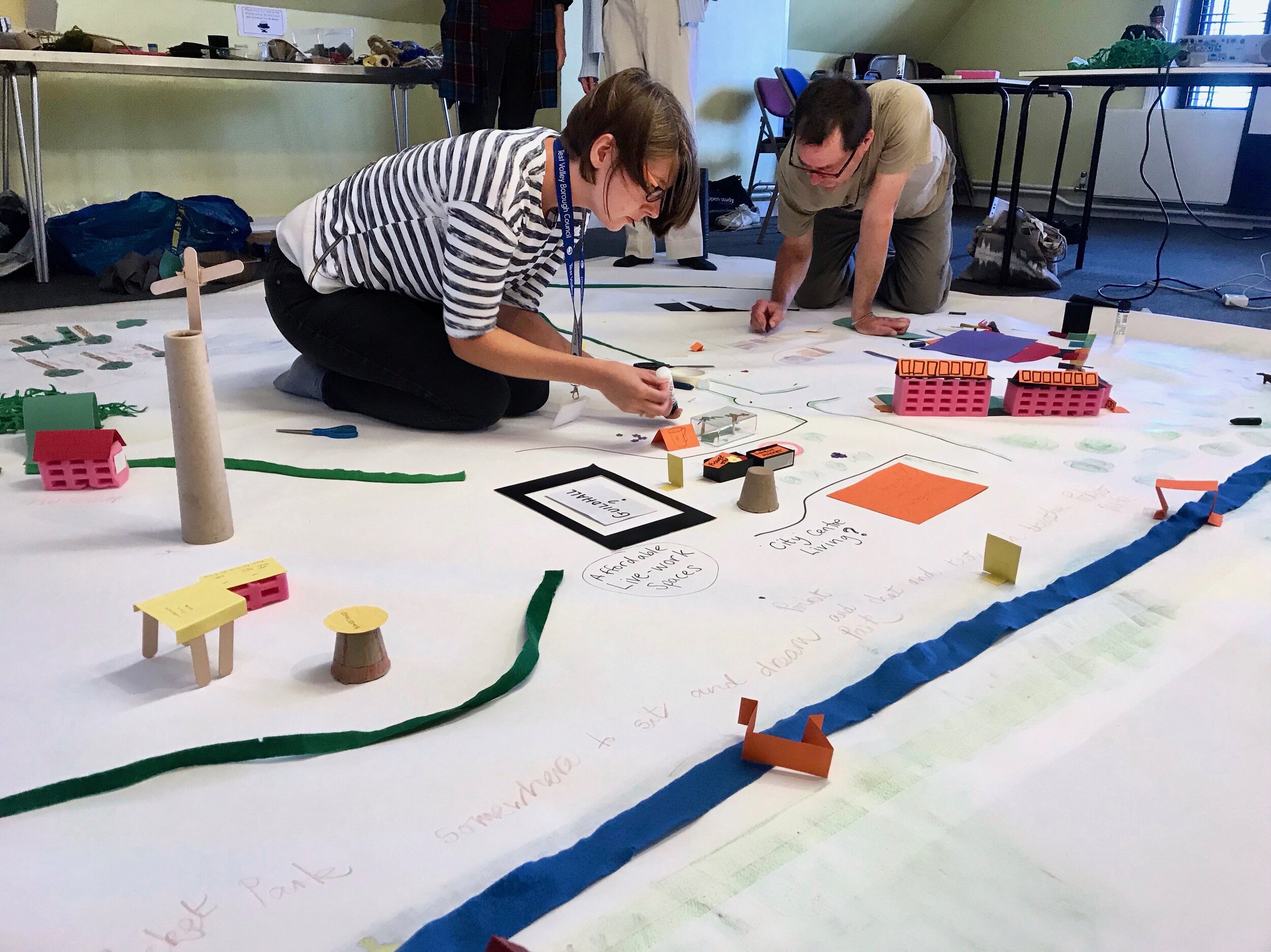
Mapping the Future Workshop (Asking Andover Residency)
11. What’s the best piece of advice you ever received?
This isn’t something that anyone has actually said to me, it’s more something that I’ve learned along the way, and that is to be yourself, as fully as you’re able.
There’s so much pressure, starting at art college, then all the way through your career, to make particular kinds of work or to use a particular kind of language, in order for your work to be noticed by the ‘right’ people.
For me, the learning that I take away from Queer River and all the research that I’ve carried out before it, is that each of us brings a unique and much needed perspective to our work and our relationships. Being different, being queer, can be hard, but if you can come through the hard bits, it can also give you a unique and valuable perspective on the world.
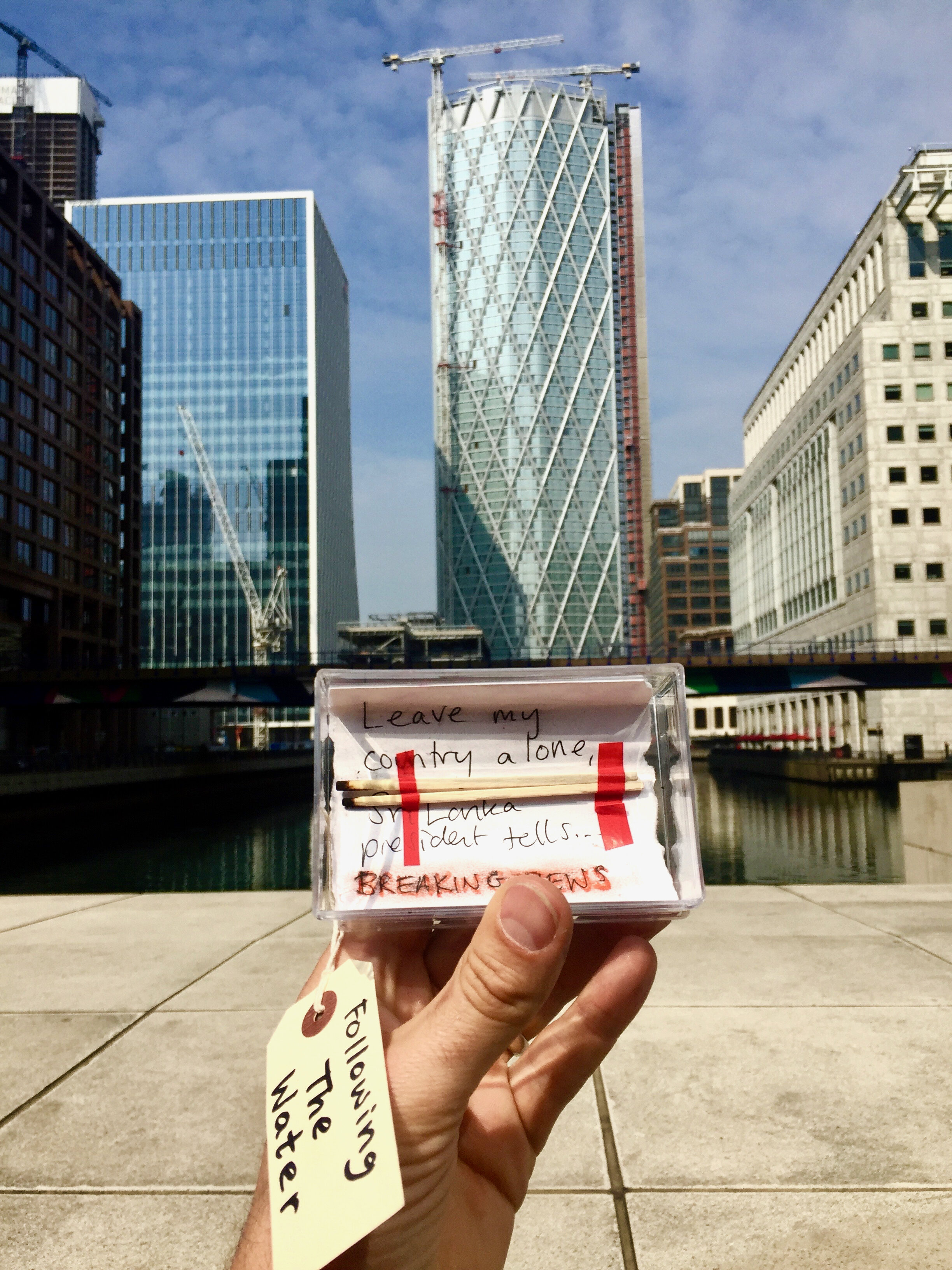
Following the Water (Urban Rural Exchange with Karen Wood)
Thank you for reading. For more information about James’ work and some of the projects named above, visit:
Stay tuned for more 11 questions with artists, makers and creatives coming your way soon. Never miss an issue by subscribing to my mailing list, and in the meantime feel free to take a look at my blog and some of my work as an artist.

11 questions with Sophie Dumaresq
I’m very excited to be able to kick off the new year with an interview with the incredibly talented Sophie Dumaresq, who talked to me about her mesmerising work as a visual artist. Based in Australia, Sophie’s vibrant art spans from new media robotics and photo media to large and small scale sculptural installations. ‘Her work explores symbiotic cycles of consumption, destruction and creation demonstrating how as a species we relate, show empathy and evolve with and within our surrounding environment’.

Hello 2021. I’m very excited to be able to kick off the new year with an interview with the incredibly talented Sophie Dumaresq, who talked to me about her mesmerising work as a visual artist. Based in Australia, Sophie’s vibrant art spans from new media robotics and photo media to large and small scale sculptural installations. ‘Her work explores symbiotic cycles of consumption, destruction and creation demonstrating how as a species we relate, show empathy and evolve with and within our surrounding environment’. Read her inspiring 11 answers below!
Why hair?
I started to experience hair loss due to endometriosis and changes within my environment. I started to collect the hair not only from my self but also from other womb carrying humans. I also started doing research into possible relationships between exposure to toxins within the environment, the female sex reproductive system and the physical make up of hair itself as well as its symbolism. I found it fascinating that the nitrogen bonds in hair make it a wonderful fertiliser for soil while also being use historically as symbol of fertility and womanhood. Its symbolism and practical use in my work has further evolved but in my earlier works it very much was an exploration of the materiality of what it is to feel alien and toxic.
What's your relationship with nature?
Complex yet filled with love, but I do get frustrated when people place nature on a pedestal as being somehow separate from the human animal when we are part of it, warts and all. My work often stems from this frustration that things somehow need to be perfect to be worthy of our love. As an artist, the materiality of our world I find is my outlet for being able to love while acknowledging the good and the bad that come with all things.
What is The Hairy Panic?
So the Hairy Panic itself is a nickname for Pancium effuse which is a native species of “weed” here in Australia. It is toxic for livestock. In 2016, it invaded and brought the town of Wangarratta to a standstill.
My Hairy Panic tumbleweeds, named after the “weed” are large hand made pink tumbleweeds make out of fencing wire and chemically processed and dyed human hair that I then installed and photographed out on a cattle farm. I think what first attracted me to the project as a white, non indigenous Australian was when I read that the original Hairy Panic was described as being a “native weed.” I couldn't stop thinking about how can something be native but also a weed? It got me thinking about who decides when something is “toxic” or a “weed” and why.
The specific shade of pink of the tumbleweeds came from the colour of the pesticide Round up containing Monsanto Glyphosate that is still used here in Australia.
What's your favourite medium to work with?
Metal, there is something quite primal with an air of Frankenstein about it for me in the way it responds to heat and makes you aware of the particles in the air around you while you are working with it. I am at my happiest when soldering or sitting in a welding bay.
What's your favourite part of the creative process?
The actual physical act of making the sculptural works. While making the Hairy Panic, I spent weeks just sitting silently welding together the fencing metal or brushing and braiding together the hair. A couple of friends joked about me going insane but I think it was the most sane that I’ve ever felt during a project. That’s also I guess what someone who had actually gone insane would feel, so who knows.
What are you currently working on?
I’m currently collecting resources for my next big project while doing a commissioned collaborative work. I did just finish a recent project done on work by Australian environmental conservationists with endangered shore birds.
It was based on the use of human hair in socks as a more humane pest control measure against foxes. The scent of the human from the hair acts as a deterrent to the foxes to keep them away from the nests. For the project I made a series of images around the symbolism of the fox, my own white colonial heritage and the socks that I then created from human nursery fleece and human hair.
What's the one piece of art you'd love to make, but haven't yet?
The project I am collecting hair and metal to work on for next year. It is another sculptural land art installation similar in scale and aesthetic to my previous work “The Hairy Panic” but closer to my baby pink human hair wearing robotic cow skull “She” in themes of materiality.
If you could pick one person to collaborate with, dead, alive, or fictional who would it be?
David Lynch, I have the upmost respect for his creative process in terms of his belief in the power of the day dream and then how we go about materialising those images into the world. There is also just something about his ability to make the romantic ugly and in turn the ugly romantic.
What’s the best piece of advice you ever received?
I guess as an artist or creative, if you enjoy the meme, make sure you're putting in the time to actually read and understand the theory behind it. Which to me pretty much comes down to putting in the time to learn about the work of those who came before you and the heritage of your shared concepts and ideas. It doesn’t have to mean becoming an academic but for me it helped me feel less lonely within my art practice which I found helped dealing with things like imposter syndrome and that crippling sometimes paralysing doubt that most creatives experience at least once during the making process.
What's the one object you'd bring to a desert island?
It is a little boring but I think Heritage seeds for the win. One of my favourite authors is Octavia E Butler and if her Parable novels have taught me anything, it is that being able to grow your own food is essential. I can always break off a branch or find a rock to sharpen to use as a weapon and or tool once I am there.
What's your one message to the world?
Be active and curious about the world and don’t just listen to those who make you feel comfortable about your position within it.
Thank you for reading. Stay tuned for more 11 questions with artists, makers and creatives coming your way soon. Never miss an issue by subscribing to my mailing list, and in the meantime feel free to take a look at my blog and some of my work as an artist.

11 questions with Fern Shaffer
For my newest interview, I had the pleasure of speaking with the incredible Fern Shaffer, who works as a painter, performance artist, lecturer and environmental advocate. Fern’s work began in conjunction with an emerging Ecofeminism movement, which brought together environmentalism, feminist values and spirituality to address a shared concern for the Earth and all forms of life.
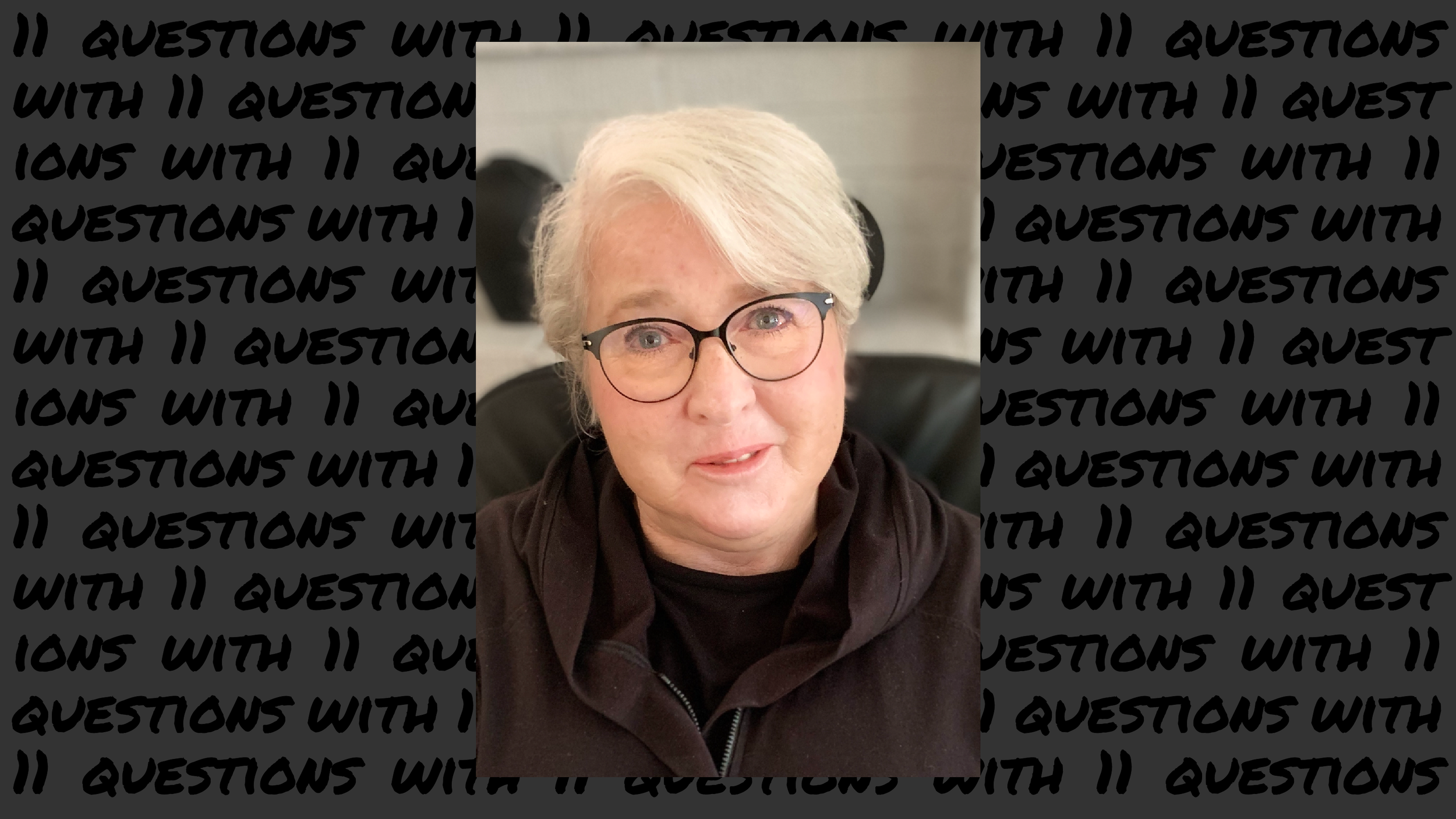
For my newest interview, I had the pleasure of speaking with the incredible Fern Shaffer, who works as a painter, performance artist, lecturer and environmental advocate. Fern’s work began in conjunction with an emerging Ecofeminism movement, which brought together environmentalism, feminist values and spirituality to address a shared concern for the Earth and all forms of life. Read her inspiring 11 answers below!
1. What inspires you to make work?
I have a need to be creative and express what I am thinking. I chose visual arts to be my expression. I will think about a subject for example trees. Then comes the list of questions of how I am going to do it. I tried drawings and painting, and decided the question would be how to build a tree leaf by leaf and I chose the Ginkgo tree and leaves. I worked on this project for over 5 years. The final project was a 100 acrylic and oil stick 8 x 10 canvasses framed.

2. How did you become an artist?
I majored in art from High School through to College and a Master Degree. I painted all the time or created art in different forms. When I joined Artemisia Gallery, I knew that I was an artist and was President of this woman run alternative gallery for 12 years. I work to support myself by teaching art and working with the elderly.
3. What was the first piece of art you created?
I was very young, about 6 or 7. I drew a plate with many colors on it in Crayola and knew that art must be a part of my life.
4. What's your relationship with nature?
I love nature and as a young child our family camped. I am interested in Science and Nature and how we live on this planet.
5. What are the Nine Year Rituals?
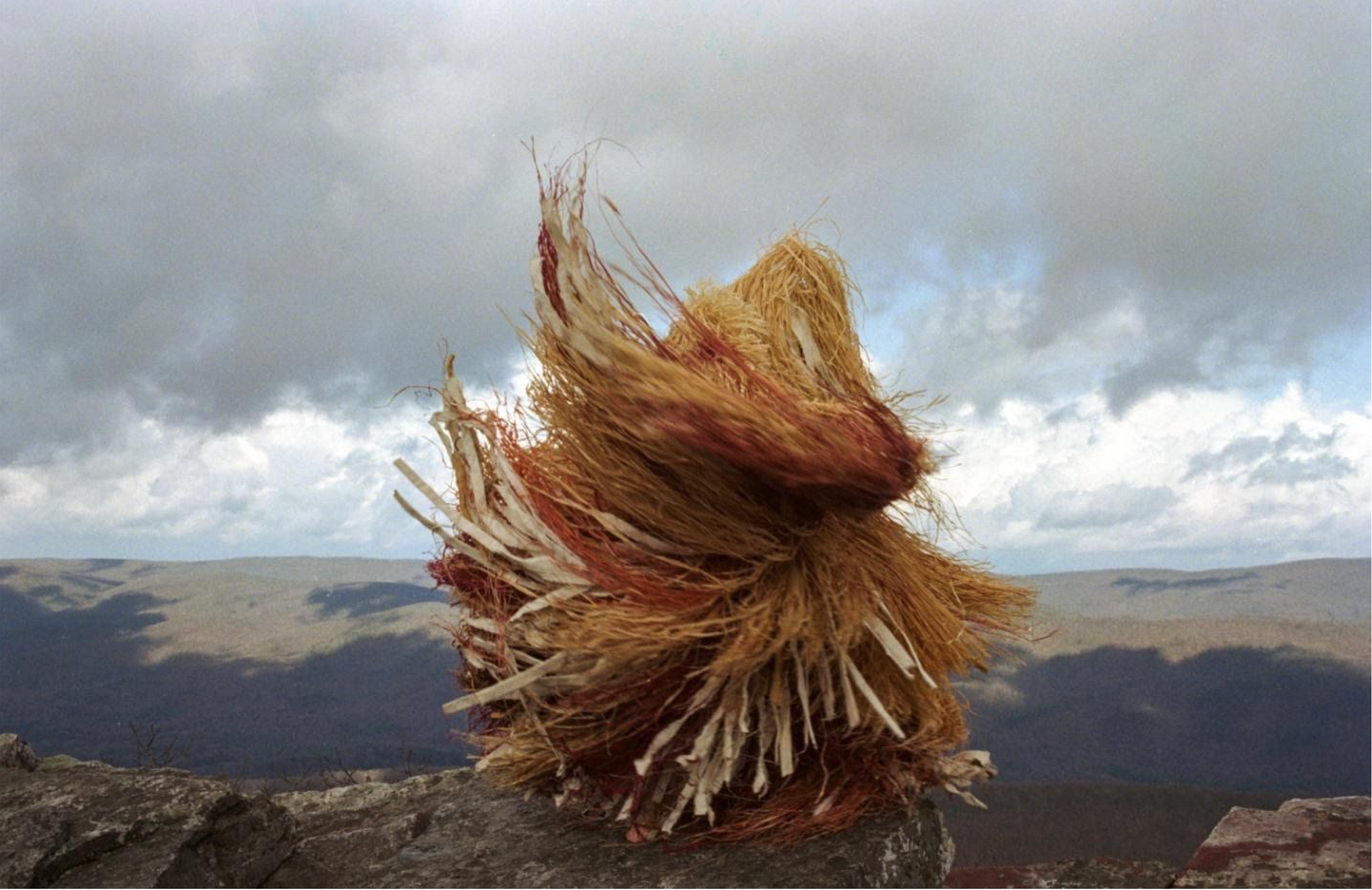
I worked with Othello Anderson for many years and we did rituals to heal the earth. We decided to do a ritual that would take 9 years as a deeper commitment to the rituals. 9 is a healing number and we followed a pattern using the number 9. All the rituals were performed on the 9th day of the month and at 9 am. The ritual took place all across the Northern Hemisphere starting on Jan. 9, 1995 through Sep. 9, 2000. Each location was a symbol for the issues that were affecting our environment. Old Growth Forests, Swamps, Filling in Valleys by blowing up mountains to gain coal, and Oceans, Streams and Rivers, Growing Food as a few examples.
6. Which was one of your favorite performances you made?
I loved the Swamp, the 9th ritual. It was a very magical feeling being in the water in a swamp that was very old. You can tell by the size of the trees.

7. What does ecofeminism mean to you?
This is the definition of ecofeminism that means the most to me: Ecofeminism is a branch of feminism that sees environmentalism, and the relationship between women and the earth, as foundational to its analysis and practice ...
8. What's your favorite art form or medium to work in?
I have no favorite. The subject or the idea I want to convey sometimes takes a lot of experimentation to make the subject I want to feel right to what I am thinking. Sometimes it is watercolor, or oil stick or acrylic or color pencils.
9. What's your favorite part of the creative process?
Experimenting, finding new materials, working in various medias, researching the whole creative process. Solving problems.
10. What's your one message to the world?
We must be kind, help each other and be sensitive to where we live.
11. What's the one object you'd bring to a desert island?
Sea plane with instructions.
Thank you for reading. Stay tuned for more 11 questions with artists, makers and creatives coming your way soon. Never miss an issue by subscribing to my mailing list, and in the meantime feel free to take a look at my blog and some of my work as an artist.