
11 questions with Sophie Dumaresq
I’m very excited to be able to kick off the new year with an interview with the incredibly talented Sophie Dumaresq, who talked to me about her mesmerising work as a visual artist. Based in Australia, Sophie’s vibrant art spans from new media robotics and photo media to large and small scale sculptural installations. ‘Her work explores symbiotic cycles of consumption, destruction and creation demonstrating how as a species we relate, show empathy and evolve with and within our surrounding environment’.

Hello 2021. I’m very excited to be able to kick off the new year with an interview with the incredibly talented Sophie Dumaresq, who talked to me about her mesmerising work as a visual artist. Based in Australia, Sophie’s vibrant art spans from new media robotics and photo media to large and small scale sculptural installations. ‘Her work explores symbiotic cycles of consumption, destruction and creation demonstrating how as a species we relate, show empathy and evolve with and within our surrounding environment’. Read her inspiring 11 answers below!
Why hair?
I started to experience hair loss due to endometriosis and changes within my environment. I started to collect the hair not only from my self but also from other womb carrying humans. I also started doing research into possible relationships between exposure to toxins within the environment, the female sex reproductive system and the physical make up of hair itself as well as its symbolism. I found it fascinating that the nitrogen bonds in hair make it a wonderful fertiliser for soil while also being use historically as symbol of fertility and womanhood. Its symbolism and practical use in my work has further evolved but in my earlier works it very much was an exploration of the materiality of what it is to feel alien and toxic.
What's your relationship with nature?
Complex yet filled with love, but I do get frustrated when people place nature on a pedestal as being somehow separate from the human animal when we are part of it, warts and all. My work often stems from this frustration that things somehow need to be perfect to be worthy of our love. As an artist, the materiality of our world I find is my outlet for being able to love while acknowledging the good and the bad that come with all things.
What is The Hairy Panic?
So the Hairy Panic itself is a nickname for Pancium effuse which is a native species of “weed” here in Australia. It is toxic for livestock. In 2016, it invaded and brought the town of Wangarratta to a standstill.
My Hairy Panic tumbleweeds, named after the “weed” are large hand made pink tumbleweeds make out of fencing wire and chemically processed and dyed human hair that I then installed and photographed out on a cattle farm. I think what first attracted me to the project as a white, non indigenous Australian was when I read that the original Hairy Panic was described as being a “native weed.” I couldn't stop thinking about how can something be native but also a weed? It got me thinking about who decides when something is “toxic” or a “weed” and why.
The specific shade of pink of the tumbleweeds came from the colour of the pesticide Round up containing Monsanto Glyphosate that is still used here in Australia.
What's your favourite medium to work with?
Metal, there is something quite primal with an air of Frankenstein about it for me in the way it responds to heat and makes you aware of the particles in the air around you while you are working with it. I am at my happiest when soldering or sitting in a welding bay.
What's your favourite part of the creative process?
The actual physical act of making the sculptural works. While making the Hairy Panic, I spent weeks just sitting silently welding together the fencing metal or brushing and braiding together the hair. A couple of friends joked about me going insane but I think it was the most sane that I’ve ever felt during a project. That’s also I guess what someone who had actually gone insane would feel, so who knows.
What are you currently working on?
I’m currently collecting resources for my next big project while doing a commissioned collaborative work. I did just finish a recent project done on work by Australian environmental conservationists with endangered shore birds.
It was based on the use of human hair in socks as a more humane pest control measure against foxes. The scent of the human from the hair acts as a deterrent to the foxes to keep them away from the nests. For the project I made a series of images around the symbolism of the fox, my own white colonial heritage and the socks that I then created from human nursery fleece and human hair.
What's the one piece of art you'd love to make, but haven't yet?
The project I am collecting hair and metal to work on for next year. It is another sculptural land art installation similar in scale and aesthetic to my previous work “The Hairy Panic” but closer to my baby pink human hair wearing robotic cow skull “She” in themes of materiality.
If you could pick one person to collaborate with, dead, alive, or fictional who would it be?
David Lynch, I have the upmost respect for his creative process in terms of his belief in the power of the day dream and then how we go about materialising those images into the world. There is also just something about his ability to make the romantic ugly and in turn the ugly romantic.
What’s the best piece of advice you ever received?
I guess as an artist or creative, if you enjoy the meme, make sure you're putting in the time to actually read and understand the theory behind it. Which to me pretty much comes down to putting in the time to learn about the work of those who came before you and the heritage of your shared concepts and ideas. It doesn’t have to mean becoming an academic but for me it helped me feel less lonely within my art practice which I found helped dealing with things like imposter syndrome and that crippling sometimes paralysing doubt that most creatives experience at least once during the making process.
What's the one object you'd bring to a desert island?
It is a little boring but I think Heritage seeds for the win. One of my favourite authors is Octavia E Butler and if her Parable novels have taught me anything, it is that being able to grow your own food is essential. I can always break off a branch or find a rock to sharpen to use as a weapon and or tool once I am there.
What's your one message to the world?
Be active and curious about the world and don’t just listen to those who make you feel comfortable about your position within it.
Thank you for reading. Stay tuned for more 11 questions with artists, makers and creatives coming your way soon. Never miss an issue by subscribing to my mailing list, and in the meantime feel free to take a look at my blog and some of my work as an artist.

11 questions with Fern Shaffer
For my newest interview, I had the pleasure of speaking with the incredible Fern Shaffer, who works as a painter, performance artist, lecturer and environmental advocate. Fern’s work began in conjunction with an emerging Ecofeminism movement, which brought together environmentalism, feminist values and spirituality to address a shared concern for the Earth and all forms of life.
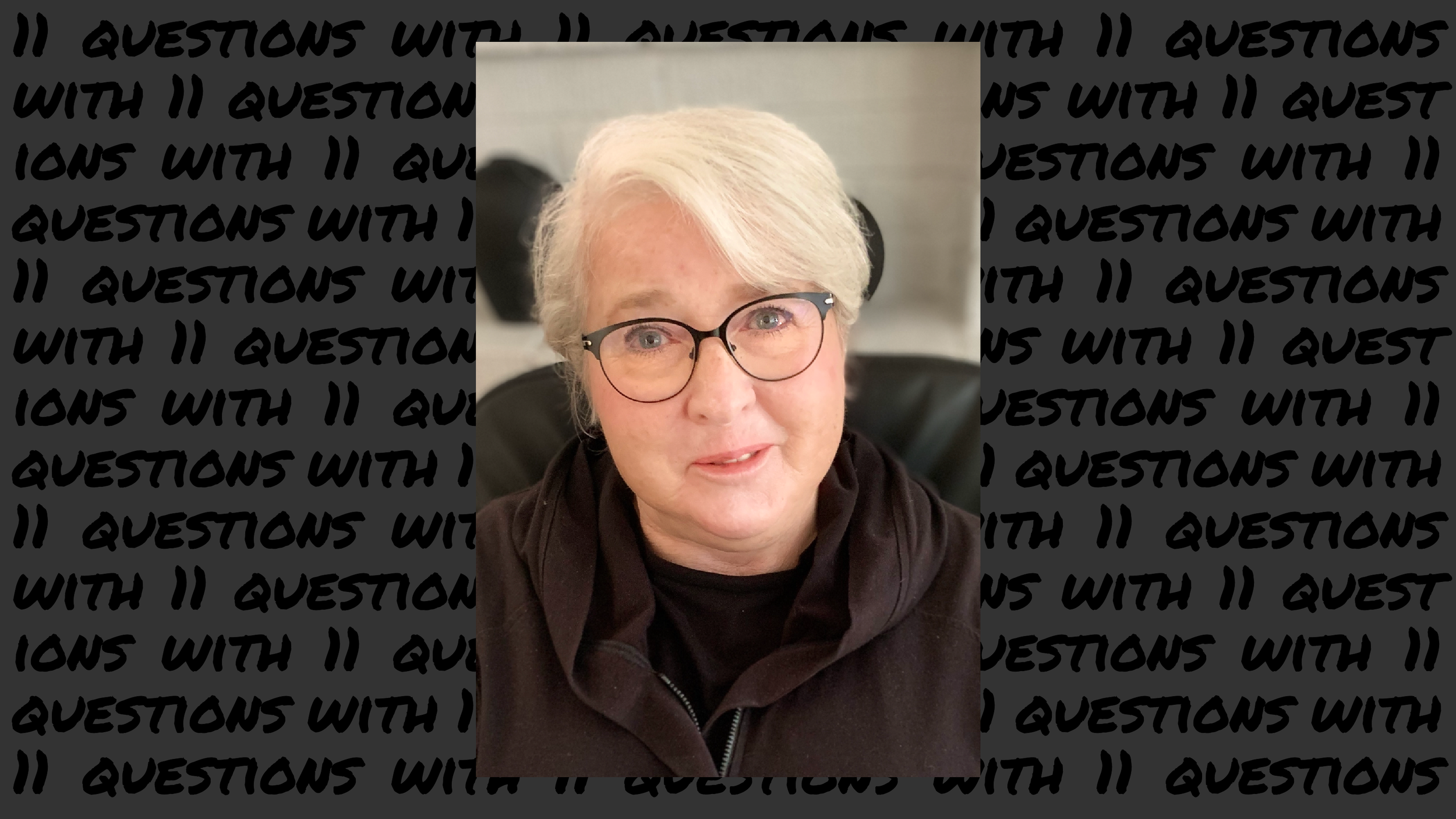
For my newest interview, I had the pleasure of speaking with the incredible Fern Shaffer, who works as a painter, performance artist, lecturer and environmental advocate. Fern’s work began in conjunction with an emerging Ecofeminism movement, which brought together environmentalism, feminist values and spirituality to address a shared concern for the Earth and all forms of life. Read her inspiring 11 answers below!
1. What inspires you to make work?
I have a need to be creative and express what I am thinking. I chose visual arts to be my expression. I will think about a subject for example trees. Then comes the list of questions of how I am going to do it. I tried drawings and painting, and decided the question would be how to build a tree leaf by leaf and I chose the Ginkgo tree and leaves. I worked on this project for over 5 years. The final project was a 100 acrylic and oil stick 8 x 10 canvasses framed.

2. How did you become an artist?
I majored in art from High School through to College and a Master Degree. I painted all the time or created art in different forms. When I joined Artemisia Gallery, I knew that I was an artist and was President of this woman run alternative gallery for 12 years. I work to support myself by teaching art and working with the elderly.
3. What was the first piece of art you created?
I was very young, about 6 or 7. I drew a plate with many colors on it in Crayola and knew that art must be a part of my life.
4. What's your relationship with nature?
I love nature and as a young child our family camped. I am interested in Science and Nature and how we live on this planet.
5. What are the Nine Year Rituals?
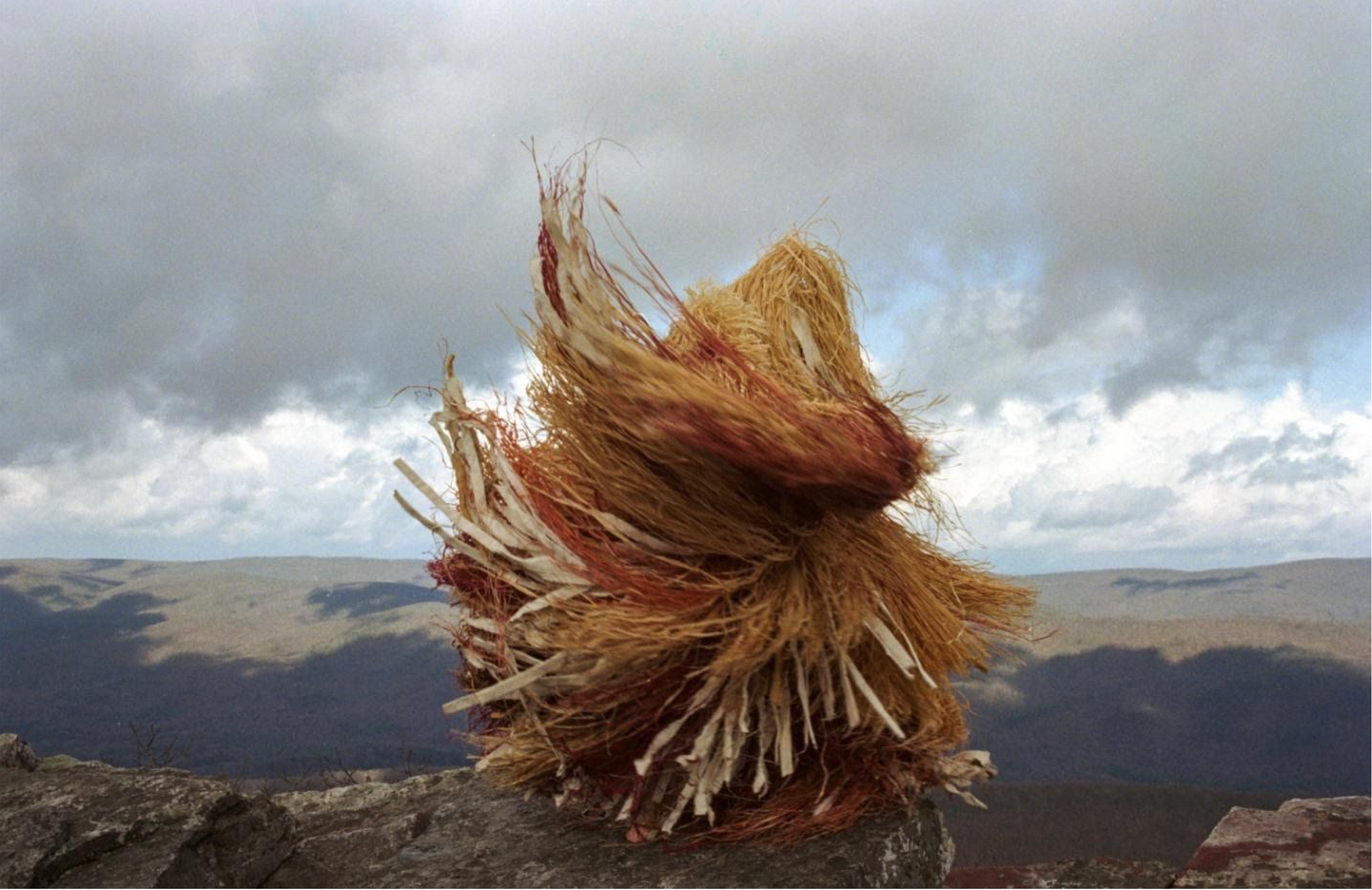
I worked with Othello Anderson for many years and we did rituals to heal the earth. We decided to do a ritual that would take 9 years as a deeper commitment to the rituals. 9 is a healing number and we followed a pattern using the number 9. All the rituals were performed on the 9th day of the month and at 9 am. The ritual took place all across the Northern Hemisphere starting on Jan. 9, 1995 through Sep. 9, 2000. Each location was a symbol for the issues that were affecting our environment. Old Growth Forests, Swamps, Filling in Valleys by blowing up mountains to gain coal, and Oceans, Streams and Rivers, Growing Food as a few examples.
6. Which was one of your favorite performances you made?
I loved the Swamp, the 9th ritual. It was a very magical feeling being in the water in a swamp that was very old. You can tell by the size of the trees.

7. What does ecofeminism mean to you?
This is the definition of ecofeminism that means the most to me: Ecofeminism is a branch of feminism that sees environmentalism, and the relationship between women and the earth, as foundational to its analysis and practice ...
8. What's your favorite art form or medium to work in?
I have no favorite. The subject or the idea I want to convey sometimes takes a lot of experimentation to make the subject I want to feel right to what I am thinking. Sometimes it is watercolor, or oil stick or acrylic or color pencils.
9. What's your favorite part of the creative process?
Experimenting, finding new materials, working in various medias, researching the whole creative process. Solving problems.
10. What's your one message to the world?
We must be kind, help each other and be sensitive to where we live.
11. What's the one object you'd bring to a desert island?
Sea plane with instructions.
Thank you for reading. Stay tuned for more 11 questions with artists, makers and creatives coming your way soon. Never miss an issue by subscribing to my mailing list, and in the meantime feel free to take a look at my blog and some of my work as an artist.