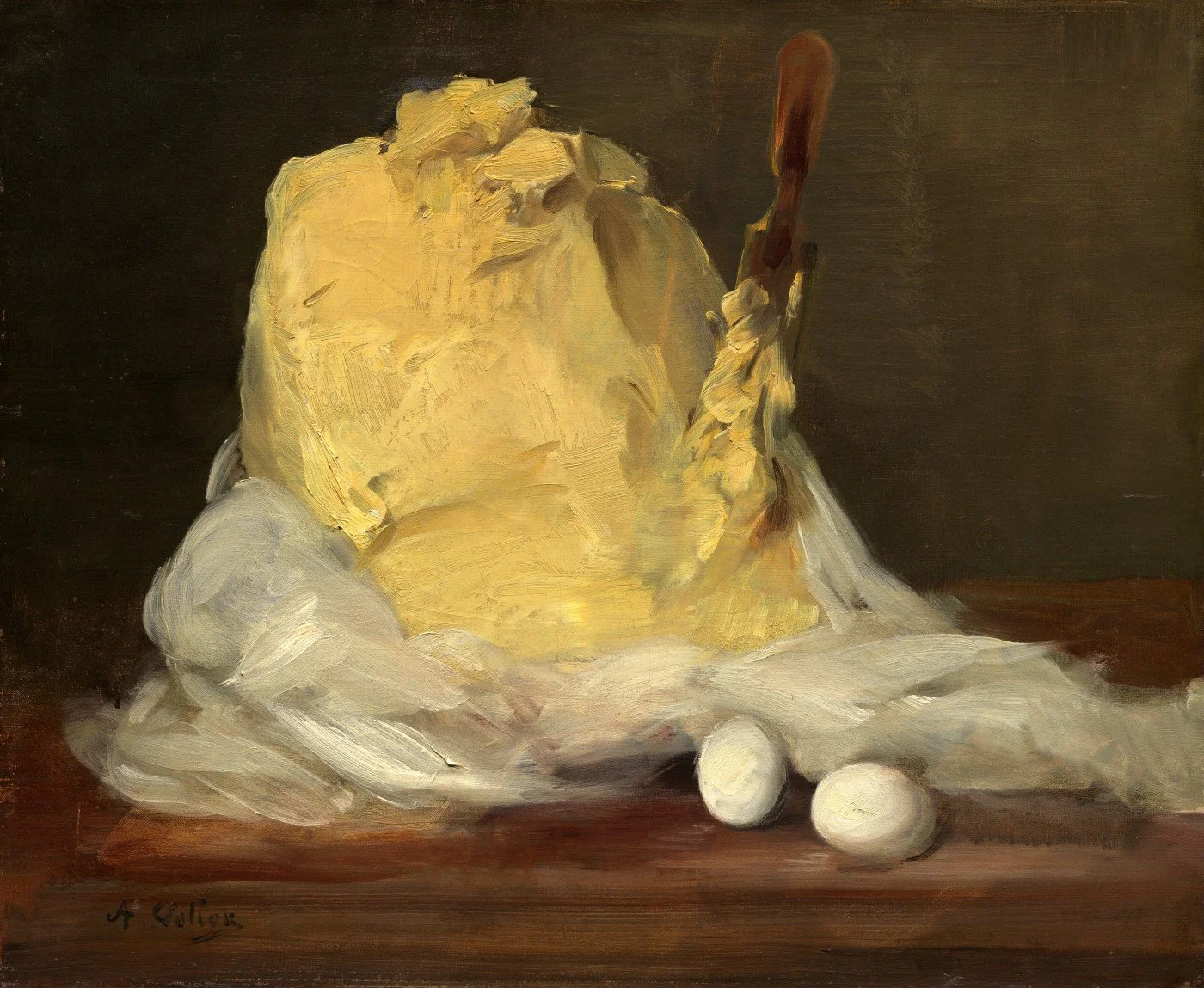
Mound of Butter
As proof of my saccharine upbringing and grandma’s wild baking, I recently came across one of the recipes I inherited …
Antoine Vollon, Mound of Butter, 1875/1885, oil on canvas, Chester Dale Fund, © 2022 National Gallery of Art
When I look at the still life painting by 19th century French realist painter Antoine Vollon, Mound of Butter, I can't help to think of my grandmother's cooking and baking. Butter, together with heaps of sugar, eggs and oil, made for the base of most of her recipes, from cakes to omelletes and beyond.
Sometimes she would proudly bring out from the white kitchen cupboard a manual 1950’s style butter churner, with a big metal handle and a flimsy plastic bowl, to show me how butter and whipped cream was made. Most of the time, however, butter came in large batches of foil paper bricks and whipped cream from large spray cans, neatly stacked in the fridge.
Cake was routinely sprinkled with sugar and topped with whipped cream. It’s no wonder I spent much of my childhood at the dentist.
As proof of my saccharine upbringing and grandma’s wild baking, I recently came across one of the recipes I inherited. It’s a list of 7 simple ingredients and measurements. And that’s it. No instructions. And not much of a hint of what we’re making. The bottom of the list features baking powder, and so I am hopeful we are baking, and not cooking, but who can say.
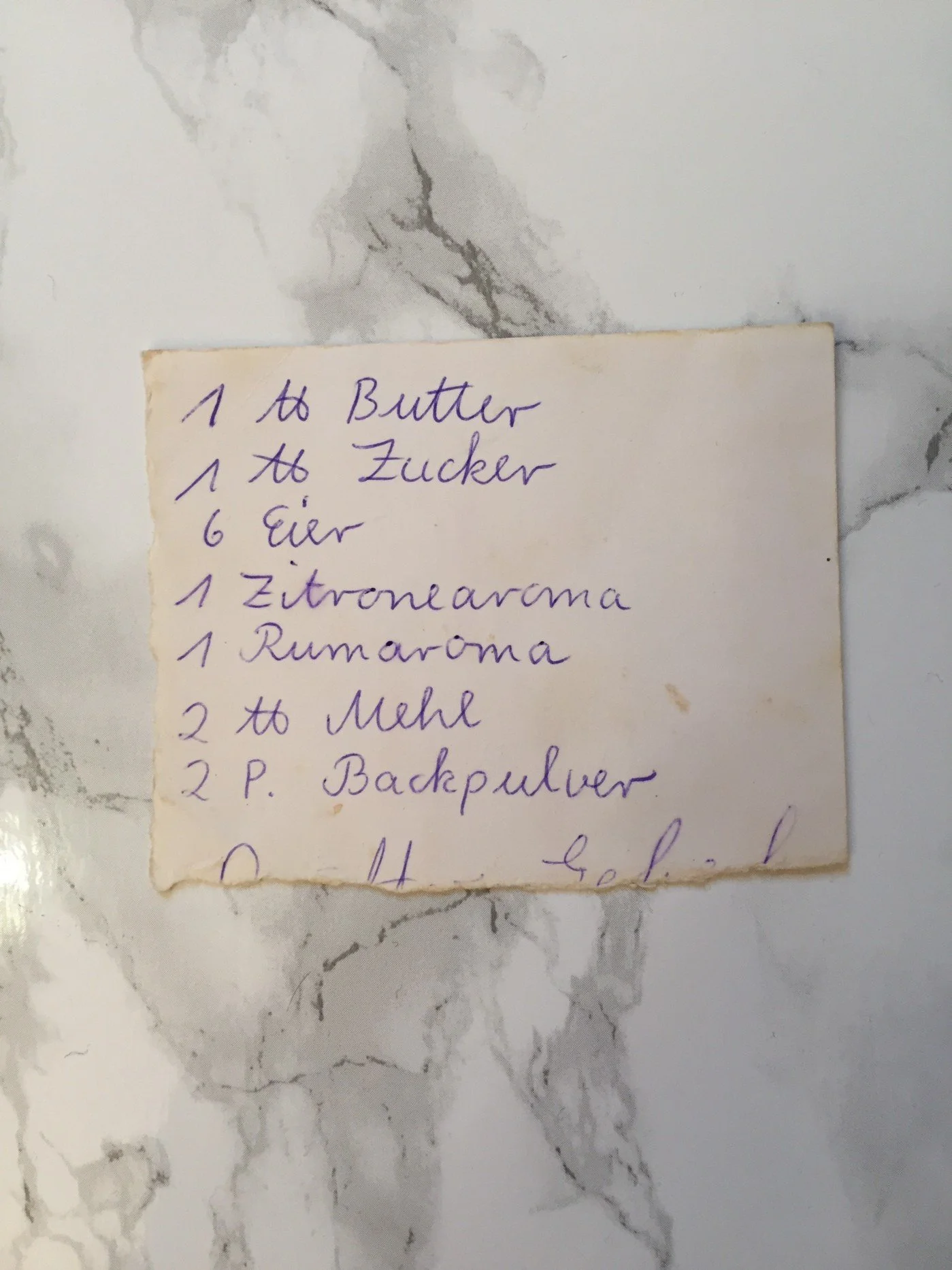
The alarming amount of individual ingredients, 1 kilogram of flour, 500 grams of butter, and 500 grams of sugar, make me believe the recipe was to feed a family of 20 … or our family of five.
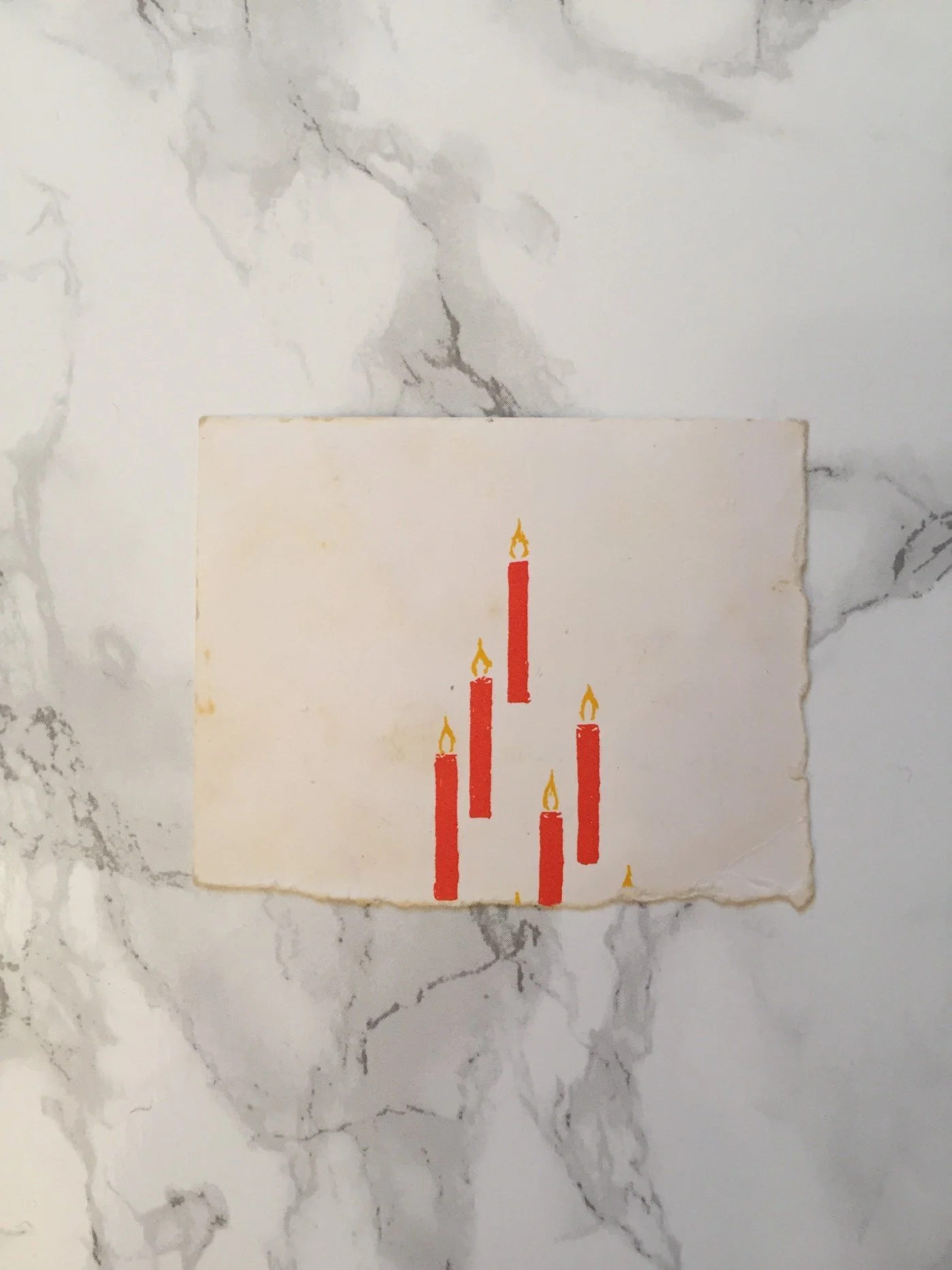
There is another clue on the back of the recipe, which features a drawing of five red, lit candles, and at least two additional flames severed by someone unhelpfully ripping the piece of paper in half. The festive illustration makes me wonder if the recipe relates to a batch of Christmas cookies grandma would have prepared. Christmas cookies often came in trays stacked on top of trays before being ushered into Christmas tins and organised in the top of the house where it was always cooler during the winter.
Climbing up the wooden stairs and stepping across the creaking wooden floors would reveal a deluge of different types of cookies and biscuits from soft and chewy to crispy and lemony.
But what about cake? Speaking to some of the other master bakers in the family, this recipe could also be an adaptation of a simple German ‘Rührkuchen’, a basic sponge or pound cake. Although the lack of liquid in the recipe is somewhat bewildering, similar cakes such as marble and lemon cakes indeed often frequented grandma’s kitchen.
Due to my own lack of patience that would allow me sit at home and shape 500 cookies, I decided to convert this little note into a simple cake recipe. I continue to experiment topping this basic batter with apples or plums, and have used different types of flours and baking tins with mixed, but overall delicious, results. Perhaps one day I’ll find the second half of this recipe or a distant relative will come forward with some of the answer. In the meantime though I am going to eat cake and carry on.
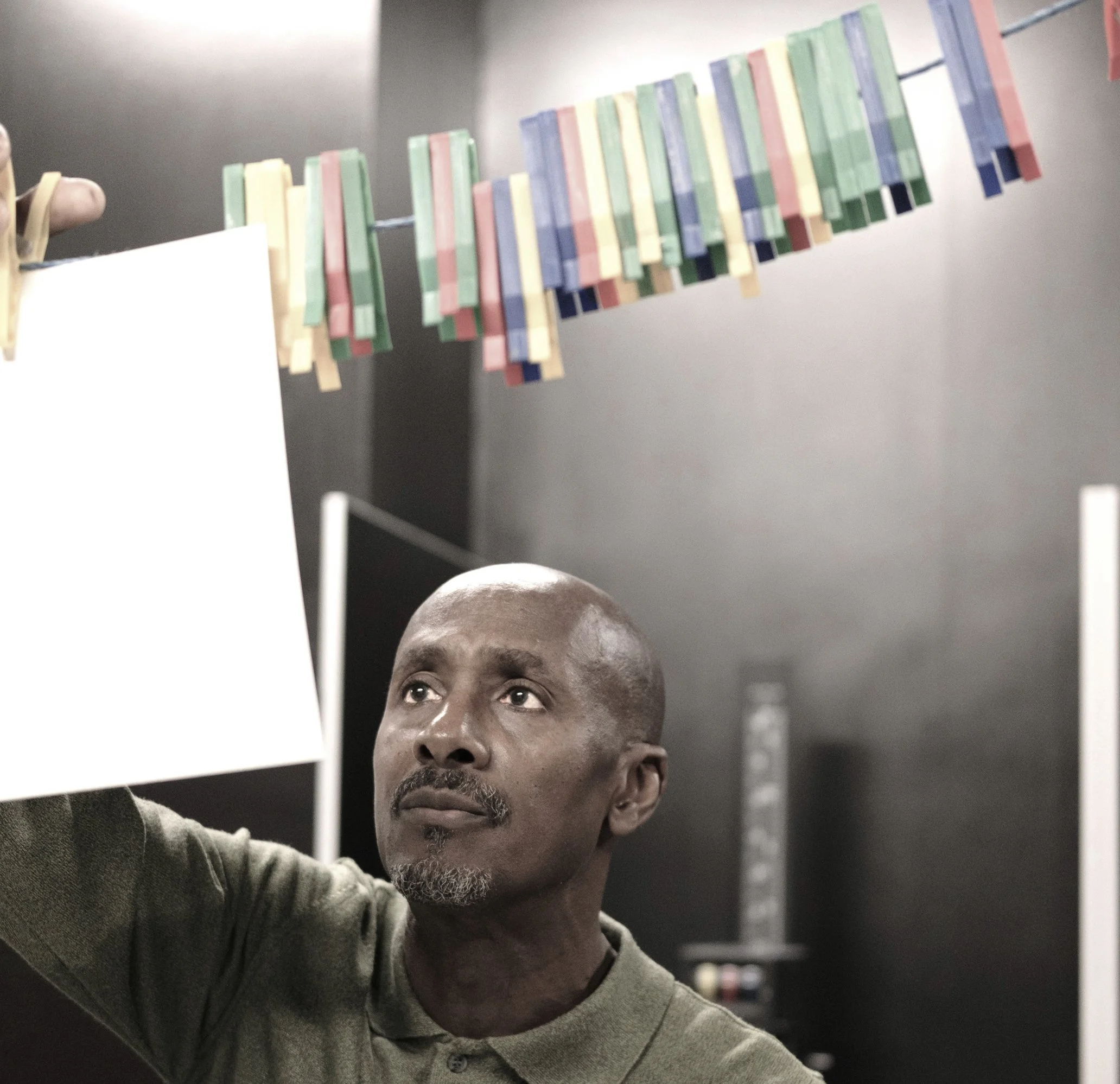
Time Lapse: Reframing the photography of Pogus Caesar
Pogus Caesar’s work as a photographer spans continents and decades, features the famous and the unknown, capturing moments of joy as well as documenting trauma and violence. His work will be featured in the upcoming and highly anticipated exhibition at Tate Britain, LIFE BETWEEN ISLANDS CARIBBEAN — BRITISH ART 1950s — NOW.
By Derek Horton
Pogus Caesar photographed in Birmingham by Christopher Waggott/DACS
Pogus Caesar’s work as a photographer spans continents and decades, features the famous and the unknown, capturing moments of joy as well as documenting trauma and violence. His work will be featured in the upcoming and highly anticipated exhibition at Tate Britain, LIFE BETWEEN ISLANDS CARIBBEAN — BRITISH ART 1950s — NOW.
What unites the many images across this diverse body of work is a strong commitment to portraying all his subjects with dignity and respect. The prolific and influential Afro-American photographer Gordon Parks, more than a half-century ago, called the camera his "weapon of choice" against racism, poverty and injustice. Caesar is part of that tradition of empowerment through Black self-representation.
During Black History Month in 2018, Caesar used his social media account to make daily posts of portrait photographs from his archive. Often criticised as a token gesture that continues to subordinate Black history rather than radically insist on its centrality to mainstream histories, Black History Month's own history is an interesting one. It was first proposed by the Black United Students organisation of Kent State University, Ohio, in February 1969, and the first wider celebration of it took place the following year, incidentally only weeks before the National Guard shot dead four unarmed Kent State students protesting the Vietnam war. February is still the designated month in the USA, although it is now celebrated in Europe in October, and was chosen in acknowledgement of a much earlier precursor. In 1926, the Black American historian Carter G. Woodman and the Association for the Study of Negro Life and History had announced the second week of February to be 'Negro History Week', a date chosen by Woodman because it coincided with the birthday, in 1818, of the African-American abolitionist Frederick Douglass.

Black Skin, White Palm, Same Blood, London, UK 2008. From the series Schwarz Flaneur
Born into slavery, Douglass later became an extraordinarily important social reformer, statesman and writer, famed for his oratory. He is perhaps less well known for his considerable interest in photography, which was invented during his adult lifetime (the daguerreotype was introduced in 1839, just a year after he escaped from slavery). Douglass was the first person to understand that photography had potential as a democratic medium, capable of bringing about social change. In 1861, he gave a lecture titled Pictures and Progress, in which he developed one of the most historically significant theories of contemporary photography, identifying how photography could be a powerful force of positive self-representation in the fight to overcome racism. He embraced photography as a technological weapon to challenge caricatures, ubiquitous at the time, that portrayed his race with exaggerated features and reinforced white supremacy by representing Black people as simple-minded and subjugated. Douglass believed that the medium could produce what he called ‘a morally true image’ of the Black subject that asserted his equality and harmonised with his observation of himself and his freedom. He maintained that photography could highlight the essential humanity of its Black subjects and restore a dignity that centuries of oppression had denied them. In posing for scores of portraits throughout his lifetime, he used his own image to show what black freedom looked like. By the time of his death in 1895, Douglass was probably the most famous and recognised Black man in the world. In his many portrait photographs, dignified and fearless, always looking directly into the camera, he is no longer the runaway slave but the powerful face of freedom.

Tremble, Jamaica 2008. From the series Schwarz Flaneur
So since the 19th century, the photographic portrait has had the potential to allow Black people to represent themselves as they want to be seen, not how others pigeonhole or even dismiss them, and ideas that stem from Frederick Douglass have continually informed and motivated Black photographers ever since. The great Roy DeCarava said in a 1996 radio interview that when he started taking pictures in the 1940s, “there were no Black images of dignity, no images of beautiful Black people. There was this big hole. I tried to fill it.” This recognition that photography has a unique ability to dignify, to give importance to its subjects and celebrate their lives and their humanity remains central, more than a century after Douglass, to Pogus Caesar’s portraits. To decide to photograph someone or something is to tell the world that it matters and deserves attention to be paid to it. Caesar’s powerful images seek and hold our attention, focusing it on the varieties of Black experience they document and celebrate.

My House, New York, USA 1999. From the series Schwarz Flaneur
While bearing witness to confrontation and violence in photographs such as those of the Handsworth Riots, Caesar’s portraits of everyday life (the dinner ladies of Holyhead School in Handsworth who returned to public view in the Shakespeare’s Globe poster for The Merry Wives of Windsor, for example) are also celebratory, representing from a personal perspective the dualities of hostility and welcome in the African-Carribean experience of life in the UK. Although the overt racism of the 50s and 60s and the street violence of the 80s may be gone for now, the UK government’s recent policies towards the Windrush generation and the underlying racism and the return of the hard-right uncovered by the Brexit debate are just two examples of the pervasive attitudes of white supremacism that persist in Britain under the cover of contemporary liberal social values. Caesar’s pictures demonstrate a clarity of vision about both the positives and negatives of Black experience alongside a fundamental humanistic optimism in his mining of his personal life for inspiration and subject matter.

Dinner Ladies, Handsworth, Birmingham, UK 1984. From the series Schwarz Flaneur
Positioning Pogus Caesar’s extensive body of photographic work within the context of conventional genres of photography poses some intriguing dilemmas. Sometimes described as a documentary photographer or a photojournalist, his approach lacks the immediacy that this might suggest. Undoubtedly his photographs are important documents — of both momentous events and daily life, of people and places, especially his native Birmingham — but their meanings shift and become richer as a result of the distance between the photographic moment and its realisation and visibility. For example, his famous photographs of the Handsworth Riots in 1985 remained unseen for twenty years, not only by a wider audience but by Caesar himself, since the film remained undeveloped and the negatives unprinted until 2005.

Handsworth Riots, Birmingham, UK 1985.
The role of the photograph as ‘evidence’ is brought sharply into focus here. If the photographs had emerged immediately into the world, as they would have as reportage in the hands of a photo-journalist, they may well have been sequestered as evidence in a legal sense against alleged rioters, possibly even against the photographer himself. This may be one of many reasons Caesar withheld them from view, even his own. That they remained literally black, as unexposed film, for decades, gave them an increased significance as evidence of a different kind when they were finally shown. They are of their time but also, in their continuing relevance, have a kind of timelessness. The time lapse adds to their importance as historical documents of the justified uprising of a community against state power and oppression.
The 1985 riot photographs were given a new context in 2019 when aligned with poems by Benjamin Zephaniah on a series of large billboards that were displayed in multiple sites across Birmingham. Handsworth 1985 Revisited was the culmination of a collaborative project three years in the making, they formed a provocatively inspiring but sobering and timely reminder that the injustices of a grossly unequal society can all too easily be stretched to breaking point. The resurgence of the far-right in British politics, the prevalence of casual racism normalised by the Brexit debate, continuing institutional racism in many aspects of our society and an increase in violent racist attacks, all demonstrate clearly that the tensions, divisions and trauma that cities like Birmingham endured in the 1980s have not gone away, but are deepening in our present climate of poverty and austerity for the many and extreme wealth for the few. The billboards project, combining Caesar’s very personal documentation of social unrest with Zephaniah’s powerfully humane and rhythmic poems, engaged a whole new audience and reconnected the injustices of the past with those of the present. The wider audience that billboards make possible is important to Caesar and further recent projects brought images from the Black Lives Matter and Music Kinda Sweet series to the streets of London, Birmingham, Glasgow, Brighton, Edinburgh, Bristol and Cardiff.

Handsworth 1985 Revisited, Birmingham, UK 2019.
Caesar’s work has taken him around the world, including to Spain, India, Latin America, Sweden, South Africa, Albania, the USA and Jamaica. For better or worse, “wherever you go, there you are”, is what someone once said about travel, and this is true of Pogus Caesar’s photographs. Wherever in the world they are shot, they are reflective of his own life and his own experience of those places — the citizen of Birmingham is a citizen of the world, but for Caesar the reverse is always also true. Wherever his work takes him and wherever his images transport us as viewers, his home city of Birmingham runs through his work as a connecting thread, a centre of gravity that grounds him and his work. The political geographer, David Harvey, has argued that the only way to seize control of cities from rampant capitalism and to “build and sustain urban life” is to assert our “unalienated right to make a city more after our heart’s desire”. Perhaps I am influenced by my own attachment to Birmingham, but I see and feel that assertion in Caesar’s photographs, and they certainly have contributed to that sustaining of urban life in his commitment to his home city. Such a subjective response on my part is legitimate I think, because generally Caesar relies on viewers to make their own connections between himself and the artworks. Of necessity, the photographer is normally absent from the photographs they shoot, and, especially in documentary photography, it is a convention of viewing that we don’t imagine the photographer’s presence in the scene, or indeed anything else outside the frame. Somehow though, in Caesar’s work, one always feels his presence and its influence on what we are seeing. The very personal and specific can at once be all-encompassing and expansive.

Day Trip to the Black Country, Walsall, UK 1986. From the series Schwarz Flaneur
In a culture that expects specialisation he might be regarded as something of a dilettante, but arguably the diversity of his life experience contributes to a very particular capacity for reflecting life’s multiplicity in his work. One of Caesar’s strengths as an artist is that his photographic practice exists alongside an impressively diverse range of other activities. Their sheer variety — chef, pointillist painter (which is where his artistic adventure began), curator, TV newsreporter, film producer and more — informs the photography which has been a more or less constant and ongoing thread through his multiple occupations. At one level, Caesar’s approach is an existentially simple one: he lives his life in his community and he always carries a camera, and so has always kept a comprehensive record of that life and that community.
It is a very substantial record too, consisting now of an archival collection of more than 19,000 35mm negatives. The essential simplicity of this approach extends also to the technical aspects of his photography. In 1986 he exhibited his first photographic work, Instamatic Views of New York at the National Museum of Film and Photography in Bradford, it consisted, as the title indicates, of photographs taken with a very basic Minolta 110 Instamatic camera. Subsequently he upgraded to 35mm fixed lens Canon Sure Shot that has become the sole tool of his trade that he still uses today. Working with this very basic camera, and almost always with available light, producing rough, grainy images, he has no interest in the burgeoning high technology that impacts on most professional photography, but which is unnecessary for his very straightforward method, where the subject and the image are more important than the technical sophistication of their production. He is constantly shooting things that interest him, subjects he cares about, that matter at the time, and then holding on to them. Giving a new meaning to the term ‘time-lapse’ in photography, he often reconnects with the photographs ten or twenty years later, as if for the first time, with all the hindsight and new perspectives that such a delay brings.

Untitled, Spain, 2003. From the series Schwarz Flaneur.
Every photograph holds a date, a specific time and place, within its continued existence as not just an image but an object. Histories are carried within each frame of film; the history that has formed the person who is the subject of the photograph, the history that has led to them and the photographer being in the same place at the same time. When the negative is printed and viewed, these histories combine with the history of the time elapsed between that moment and our viewing of the photograph, and our own history that informs the way we see and ‘read’ the image. The question of when a work of art ‘happens’ is often implicit in Caesar’s images: is it the moment of its production — for a photograph the moment captured in the brief instant the shutter is opened — or the time it meets its audience, when it is published or displayed? The conceptual gap between the artist’s intention and the viewer’s interpretation is mirrored by a temporal gap between the event recorded in the photograph and the time it is seen — seen again as an image by the photographer as viewer of his own work, or seen for the first time by the rest of its audience whenever and however they encounter it.

Pivot-A Stronger Pull, London, UK 1989. From the series Schwarz Flaneur
Just as Caesar does not fit neatly into the documentary category of photo-journalism, neither is he directly part of the tradition of street photographers such as Lee Friedlander or Gary Winogrand. They were self-consciously making photographs as artworks and their working method in relation to their subjects was essentially one of opportunistic voyeurism. Caesar is much more involved in the photographs he takes, connected to his subjects, and a part of the communities with whom he works. Some of his photographs show mundane aspects of people’s everyday life on the street, in the home or at work, while others are of widely recognisable subjects, ‘stars’, whose images are part of a common cultural memory. To some degree though, they all bear witness to racial, class and geographical difference, whether they show anonymous figures or the more commonly recognised. That is to say, for example, an image of Lenny Henry ‘means’ something different to an African-Caribbean viewer from the West Midlands as compared to a middle class white viewer who has only seen him on television. Caesar’s photographs reflect people at the intersections of different identities and genres of cultural expression, showing wide varieties of authentic Black experience that are validated by his honest, empowering, and positive representations. While media images frequently commodify Black trauma and tragedy, these photographs, whether of children playing on the street, school cooks and dinner ladies in Handsworth, or portraits of musicians, in the series Muzik Kinda Sweet for example, are intimate and purposeful images of the dynamic, resourceful and creative aspects of Black culture that more often celebrate Black joy and wellness.

Stevie Wonder, Birmingham, UK 1989. From the series Muzik Kinda Sweet
The powerful series, US of A, looks at religion, sex, identity and race, bringing an alternative narrative to the American experience from a Black British perspective. Cooking Ice, from this series depicts the failings of former President Nixon’s “war on drugs” in which in 1971 he increased the power and funding of America’s federal drug control agencies. Over a period of time this policy increasingly resulted in a widespread public perception that predominantly associated African Americans with the consumption of hard drugs. Ice, commonly known as crystal meth, is one of the most dangerous and highly addictive drugs of recent years, created by mixing chemicals in a synthetic process known as cooking. It generates an initial feeling of euphoria but its psychological effects can develop into paranoia, obsessive behaviour and delusions of power. The outstretched hands in Cooking Ice symbolise the steel grip that drugs have on American society, whilst the stark background and distorted halo allude to the targeting of Black communities by the US administration. Decades later and billions of dollars spent, the war on drugs is still being fought with no end in sight. This artwork is an example of how the whole US of A series, working more experimentally with the photographic image and often incorporating text, documents in a multi-layered way the consequences of white supremacism in action.

Cooking Ice, 2015. From the series US of A
The series Represent features portraits, from Benjamin Zephaniah to Lee ‘Scratch’ Perry, Jay Z to Desmond Tutu, from Jesse Jackson to Paul Robeson Jr, almost all taken in Birmingham. The National Portrait Gallery has recently acquired eight of Caesar’s portrait photographs, made between 1983 and 1992; an acquisition that gives important national and institutional recognition to his significance as a contributor, from a Black British perspective, to the visual recording of recent Black history. The eight photographs are a striking and varied selection. The artist Sonia Boyce is portrayed simply and candidly in a study of thoughtful contemplation, whilst a youthful John Akomfrah, the filmmaker, beams a life-affirming smile at the camera, riding a bike outside Birmingham Town Hall. Artist Gavin Jantjes and poet Benjamin Zephaniah share a similar pose, head in hands, in two otherwise very different photographs. Looking directly into Caesar’s lens is the legendary photographer Vanley Burke, there is both warmth and sadness in the piercing eyes of the artist Donald Rodney, who died tragically young. The actor, comedian, writer and broadcaster Lenny Henry looks confidently outward at the world through mirrored sunglasses, whilst musician and record producer Lee ‘Scratch’ Perry peers enigmatically over his shades, posing very deliberately in his characteristically eccentric fashion.

Donald Rodney, Birmingham, UK 1992.
Caesar’s vast archive of images, 19,000 and growing, is an important reflection of what Black history is and has been. However long it is since they were taken, whatever the time lapse between shooting and viewing, these images will remain an important historical record both of and from a Black British perspective. One of the best descriptions of Caesar’s role, I think, can be found in the title of another of his series of work, Schwarz Flaneur. Reflecting the figure of the flâneur as described by Walter Benjamin as a wandering urban spectator, an investigator of the culture of the city and its manifestations of capitalism’s alienation, Caesar might indeed be seen as a ‘Black flâneur’. His unassuming approach enables him to capture unguarded moments with a photographic gaze that is analytical but also caring and intimate. Their style and working method differ, but Caesar can be seen alongside photographers like Gordon Parks or Dawoud Bey as he explores the inherent beauty in being ‘unapologetically Black’, and presents us repeatedly with what, thinking about Black photography as long ago as 1861, Frederick Douglass called, ‘the morally true image’.
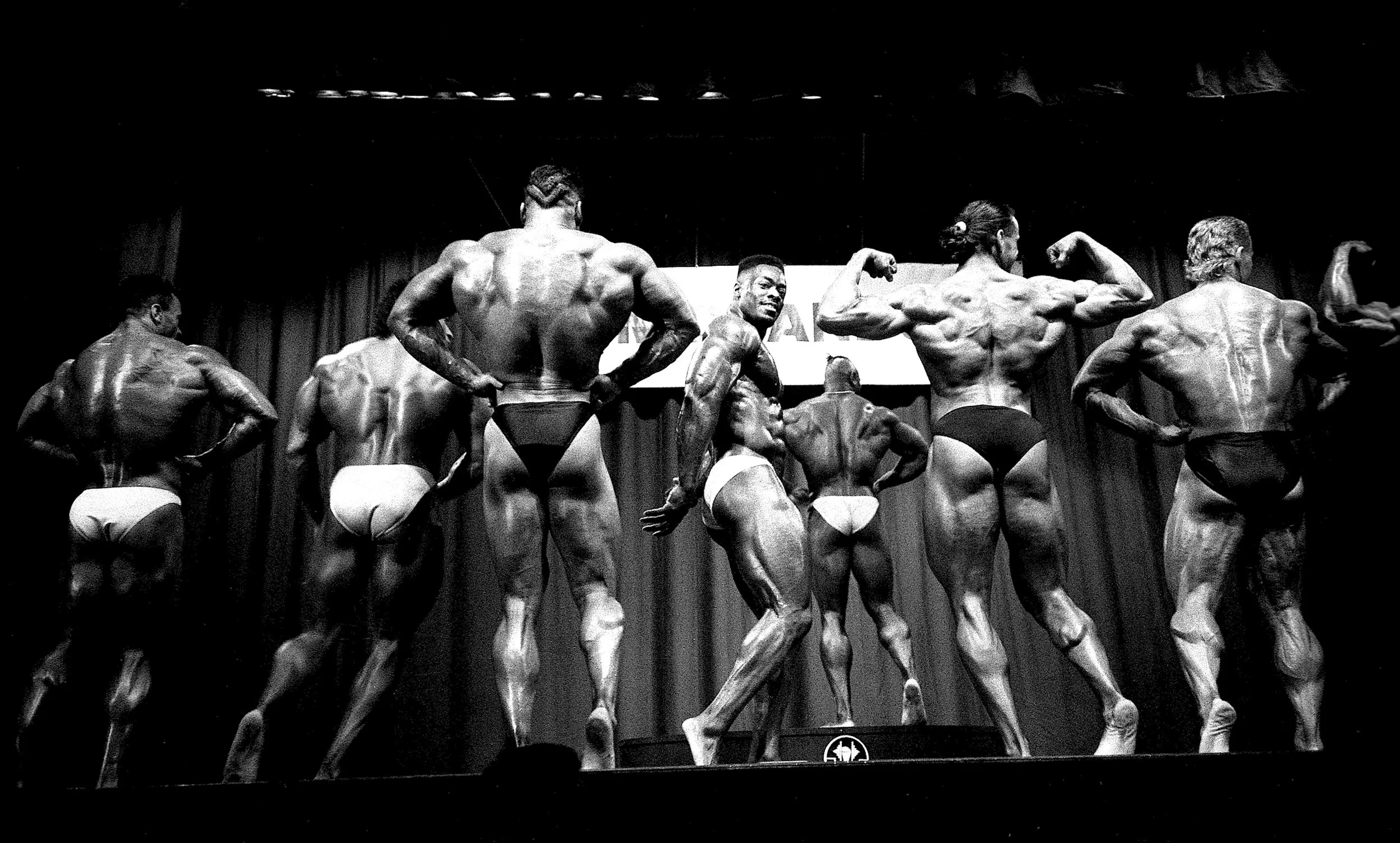
Protein III, Dudley, UK 1990. From the series Schwarz Flaneur
In his short story, Sonny’s Blues, James Baldwin suggests that to truly understand an artist, one must fully engage with that person’s oeuvre. At the end of the story, the narrator finally goes to a jazz club to listen to his brother play. “What is evoked in [the musician], then, is of another order, more terrible because it has no words, and triumphant, too, for that same reason. And his triumph, when he triumphs, is ours”, he tells us. “He could help us to be free if we would listen.” Engaging with Caesar’s oeuvre, with the multiple photographic series he has made throughout his adult life, can help us to envisage freedom through their focus on and amplification of histories that are often systemically marginalized. There is an intensity to his images that reflects the emotional and intellectual commitment involved — a single-minded dedication that provides a fierce, bright illumination of Black British collective memory, personal identity and what it means to be ‘home’ and to ‘belong’. These words of the late Maya Angelou quietly resonates with Caesar. “A bird doesn’t sing because it has an answer, it sings because it has a song.”
Text © Derek Horton 2021 https://independent.academia.edu/DerekHorton/CurriculumVitae
Images © Pogus Caesar/OOM Gallery Archive. All Rights Reserved, DACS/Artimage 2021
Parents Today/Handsworth 1985 Revisited © Benjamin Zephaniah/Pogus Caesar/OOM Gallery Archive. All Rights Reserved, DACS/Artimage 2021
Life Between Islands Caribbean-British Art 50s — Now, Tate Britain, London
01 December 2021–03 April 2022

Turning Negative into a Positive: Dr Pogus Caesar interview for DACS
I am a Black British artist working in a range of media, this includes photography, painting, publications, conceptual art and large scale outdoor installations. Early on in my career there was a stark realisation, it would be difficult to confine my practice to one form. Working in this way affords the opportunity to attempt new modes of expression and also make and resolve mistakes.
‘Art and life are similar, it’s about solving problems’

Photograph: Brian Benson/DACS
I am a Black British artist working in a range of media, this includes photography, painting, publications, conceptual art and large scale outdoor installations. Early on in my career there was a stark realisation, it would be difficult to confine my practice to one form. Working in this way affords the opportunity to attempt new modes of expression and also make and resolve mistakes. My photographic archives of 35mm negatives grants me the joy of rediscovery and reconnecting with past travels and experiences. I find it rewarding when images taken decades ago can still resonate and connect with the public. Art is to be shared. Allow the viewer an opportunity to decide if your practice connects with their political, cultural, social and religious convictions. As a Black artist residing and working in Britain, numerous obstacles have been placed in my way, the glass ceiling may seem impenetrable however it has weak points. Where possible I conquer fears and insecurities, it is a motivating force. I constantly remind myself, the only one stopping me is me.

Brain Too Big: 2015
We artists are definitely a vital part of Britain’s cultural identity, it has always been the case and will undoubtedly continue. To a great extent we are documenters to unfolding scenarios that are ongoing within British society, it is vital to unfold the curtain, look in the mirror and reveal the truth as we visualise it. Recent events have provided much inspiration for our ongoing artistic practice. To a great extent, isolatation and solitary conditions allows us to view the globe through a brighter but often shattered lens. I am witnessing, a diverse, energetic and vibrant collective of artists emerging throughout Britain. Technology via online portals provide the ideal opportunity for instantaneous interaction. Art has no boundaries, expressing oneself especially in these days of uncertainty and surrealism is of the utmost importance. Britain may wish to consider reprogramming it’s attitude towards artists, understand our true value and see us as visual messengers existing at this particular moment in world history. It is important to view our palette and remember, we are not residing in a country where artistic apartheid reigns. Our cultural and symbolic narratives will be laid bare in years to come.

God Aim Destiny: 2017
The financial challenges faced in this online environment are wide ranging. We have to adapt and unearth new forms of working and collaborating on a global platform. It is important to find partners in an attempt to build and sustain relationships — the world wide community is extremely vibrant. As an individual, working online does not usually present any issues, if anything arises this can be quickly resolved. Engaging with the online community I’m able to discuss projects in a clear and cohesive manner. Regarding the financial aspect, the outcome is always long term. We artists are extremely resilient and used to prolonged periods of inactivity.

Rest Home: 2014
Regarding the unauthorised exploitation of my images, this has occurred numerous times. The parties involved vary from individuals to established organisations, the latter being well versed in the terms and conditions regarding the infringment of copyright. The steps taken in order to resolve the situation have included personally contacting those who contravene and requesting the image/s be removed immediately — there is usually a positive conclusion. Since becoming a member of DACS, I have found that it affords the opportunity to engage with skilled and competent personnel who can resolve disputes in a professional and non confrontational way. Constructive outcomes are always preferable.

Miss Thorne: 2015
An equipment levy would have been of substantial value in the early days of my practice. Working in 35mm film, processing and printing costs were and still are expensive. However limiting myself to 36 frames of film has taught me the value of discipline and economics. I’m sure there is a vein of thinking that artists will continously expend their finances until the next exhibition, acquisition or royalty payment. Equipment however cheap still has a cost attached. A financial levy for artists, irrespective of the amount will hopefully support artistic practices, sustain growth and enhance long term creativity.

Untitled: 2017
In terms of personal struggles being the key to succes. For creatives, there are many routes towards artistic achievement, I don’t believe there is a formula. One can buy into the notion, unfortunately it may withhold personal growth and development. I am a great believer that art can be created by using anything. I reflect on past experiences, my first entry into the artworld was as a pointillist painter. I couldn’t afford brushes and paint so used fountain pens and school ink. Those paintings would eventually become part of permanent collections in Leicester Museum & Art Gallery, Mappin Art Gallery, Sheffield and presented to the late Lady Diana, Princess of Wales. It is important to be a realist, believe in yourself and visualise your potential. This artworld can be heartbreaking, full of promises and rivalries. Personally I’d never forgive myself if it prevented me from travelling on a prolonged and creative path.

You’re Missing the Point: 1982
All images © Pogus Caesar/OOM Gallery Archive. All Rights Reserved, DACS/Artimage 2021.
11 questions with Invisible Flock
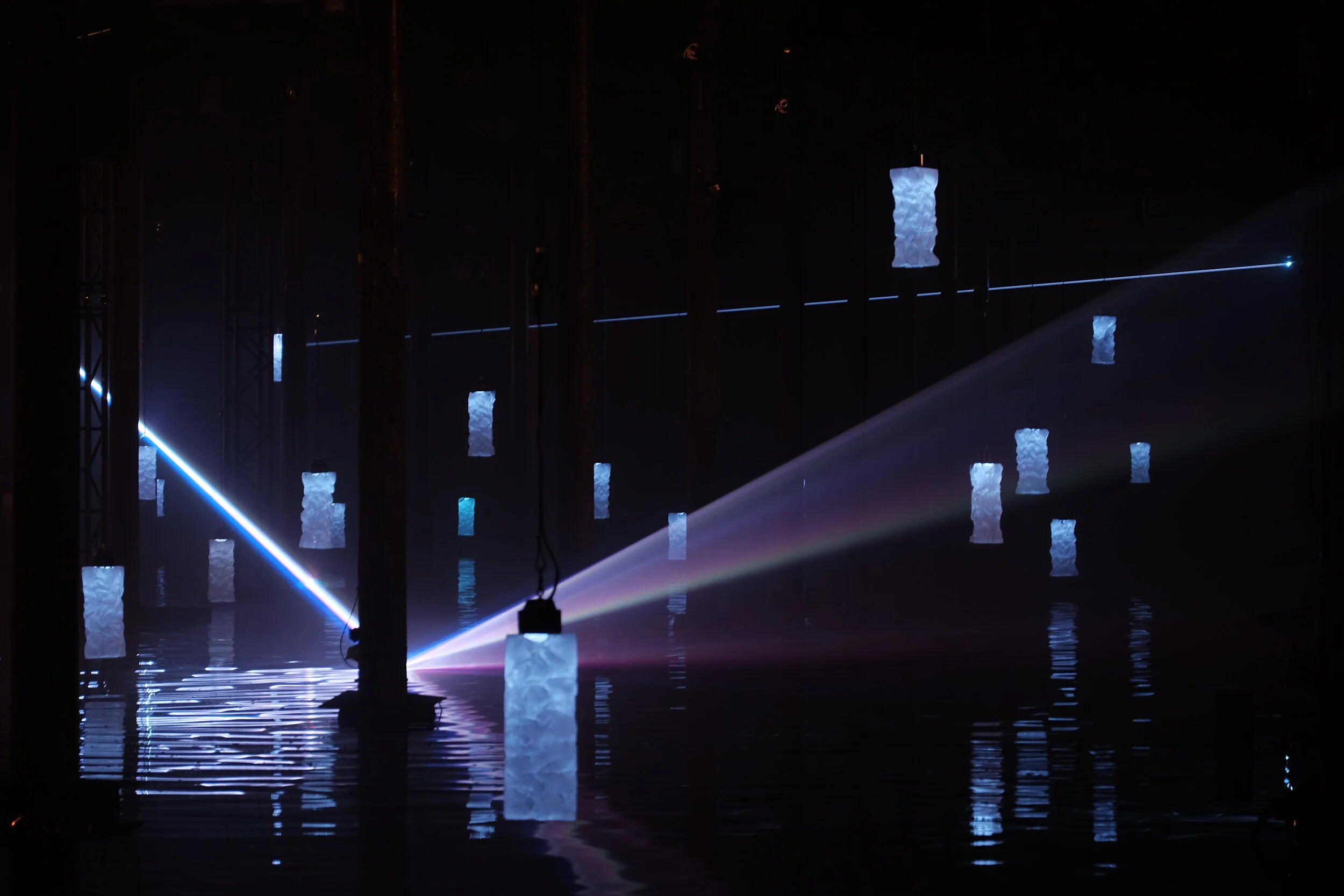
For my latest interview, I’m thrilled to have been able to talk to Invisible Flock, the award-winning interactive arts studio based at Yorkshire Sculpture Park. The group operates at the intersection of art and technology and are artist led. Working from a sustainable laboratory space, they provide a fantastic residency programme and invest their time in some of the most mesmerising sensory installations and environments to “renegotiate our emotional relationship to the natural world”. Take a look at Invisible Flock’s wonderful response as part of their 11 answers kindly sent my way by Invisible Flock's Technical Director Ben Eaton.

Image: Aurora, an elemental installation made for the iconic Toxteth Reservoir in Liverpool, by Invisible Flock in collaboration with Miebi Sikoki & Rudi Nurhandi (Digital Nativ, Indonesia), Babitha George & Romit Raj (Quicksand, India), Abshar Platisza (Indonesia), Azusa Ono (Japan/UK), Bagus Pandega (Indonesia), Etza Meisyara (Indonesia), James Hamilton (UK) and Simon Fletcher (UK).
For my latest interview, I’m thrilled to have been able to talk to Invisible Flock, the award-winning interactive arts studio based at Yorkshire Sculpture Park. The group operates at the intersection of art and technology and are artist led. Working from a sustainable laboratory space, they provide a fantastic residency programme and invest their time in some of the most mesmerising sensory installations and environments to “renegotiate our emotional relationship to the natural world”. Take a look at Invisible Flock’s wonderful response as part of their 11 answers kindly sent my way by Invisible Flock's Technical Director Ben Eaton.
How did Invisible Flock originate?
We began 12 + years ago making installation heavy interactive experiences for audiences. We’d come out of an installation theatre and live art world and were primarily focussed on technology and interaction and bringing audiences into the work in new and experiential ways. In that time the team has expanded, Ben and Victoria were joined by Catherine and later Klavs and our expanded universe of friends and collaborators slowly coalesced. Although I think you could still find grains of what we are now as a studio, even in our very first scrappy pieces, in a way I think the studio as it now exits became the most recognisable when we began to work internationally as I think the scope and tone of the work shifted then to what we are now.
What does it mean to you to be artist led?
For us it remains about the proximity to the work, having a belief that the mechanics by which a piece of work is brought about and the stuff that gets decided around the office table is as important to the practice as the work that happens in the workshop or in R&D. Simply it means that our focus is always on the practice and the studio’s choices are always focussed on how to best protect, nurture and grow it.
Why are you interested in interactive and participatory art?
We have always been interested in dissolving the barriers that often sit surrounding culture, those of physical space, time, lines between audience and creator, formalised or informalised participation. We live in a time where technology allows us to create and imagine new forms of interaction and participation all the time, and it's not only an exciting time for artists in that respect but it is also beholden to them to be part of this conversation. It is even more crucial to be re-imagining what it means to be an audience, or a participant in this distributed technological age before the slow inevitable creep of monetisation and commercialisation completely overtakes what could be incredible and beautiful means of communication.
How does Invisible Flock relate to nature?
Deeply. All of our practice is rooted within it. It has been our explicit sole focus as a studio for the past 5 years. We moved our studio out of the city last year and most of our collaborators and projects involve working directly with ecosystems that are at risk or people living on the edge of environmental collapse. Both our artistic output as a studio and also our research and thinking is around developing new and critically in depth techniques to consider our place within nature.
What’s Invisible Flock's one message to the world?
We’ve never been very good at slogans which i think is part of why we make art.
What's Invisible Flock's approach to new technologies?
Critical and suspicious whilst remaining always open to its possibilities. We think of technology as a tool and get excited about what it allows us to do, but this does not mean that the tech itself has to be brand new, rather it can be new to us, or be suddenly accessible to us due to some newly acquired knowledge. But technology is a violent and destructive force the downstream effects of which are often far removed from us and our audiences. We try and exist beyond consumer level tech and gadgets and instead have a more critical approach to the full vocabulary of a technology, which involves considering its lifespan, how fully it can articulate an idea, how much it allows us to use it expressively as artists rather than as physical extensions of the object’s original developer’s vision.
How has Invisible Flock changed over the last decade?
We are a tight and small team of people so we have changed as much as anyone does in a decade, ie quite a lot and not at all at the same time. We have been incredibly fortunate to work with some brilliant colleagues around the world and to undertake some incredible projects and work and this has allowed us to arrive at a place where we are able to look at our work and the wider industry with an amount of calm and reflectiveness. We strive to be in control of our work, take the time to think things through deeply and run our organisation with kindness openness and integrity.
What are some of your current projects?
We are taking part in some long form projects at the moment, partly driven by the pandemic but also by choice, we have been collating year long audio recordings in the arctic circle with some remote field recorders we invented. We are re-developing a piece of work that was shown in Indonesia two years ago that creates a series of tangible and kinetic sculptures all drawn from a series of endangered landscapes. We also have a large project that came out of months of recordings of the jungle in Sumatra just before the pandemic hit that brings audiences into the rhythms of the life of Siamang gibbons in the jungle.
What are Invisible Flock's ambitions for the next decade?
We are making an interesting new move into research at the moment and are working hard so that our work and practice has real world impact so that will be an exciting new direction. Other than that I hope like the last decade to have changed a lot and not at all and to still be making work that is relevant and useful and a net positive for the environment, audiences and my immediate community.
What's the one object Invisible Flock would bring to a desert island?
A field recorder. Seeing as no matter where I am every time I try and record nature some kind of human noise always shows up eventually I would only need to start recording to be sure to be rescued. But if I wasn’t rescued then I would want to capture that silence before it disappears.
What's your one piece of advice to aspiring artists?
There’s no one way to do it, or one definition of practice.
Thank you for reading. Stay tuned for more 11 questions (and answers) from artists, makers and creatives coming your way soon. Never miss an issue by subscribing to my mailing list, and in the meantime feel free to take a look at my blog and some of my work as an artist.
11 questions with James Aldridge
This month, I spoke with contemporary artist James Aldridge about his interest in climate and biodiversity, participatory art, the Climate Museum UK, and some of his most newest projects, including Queer River.

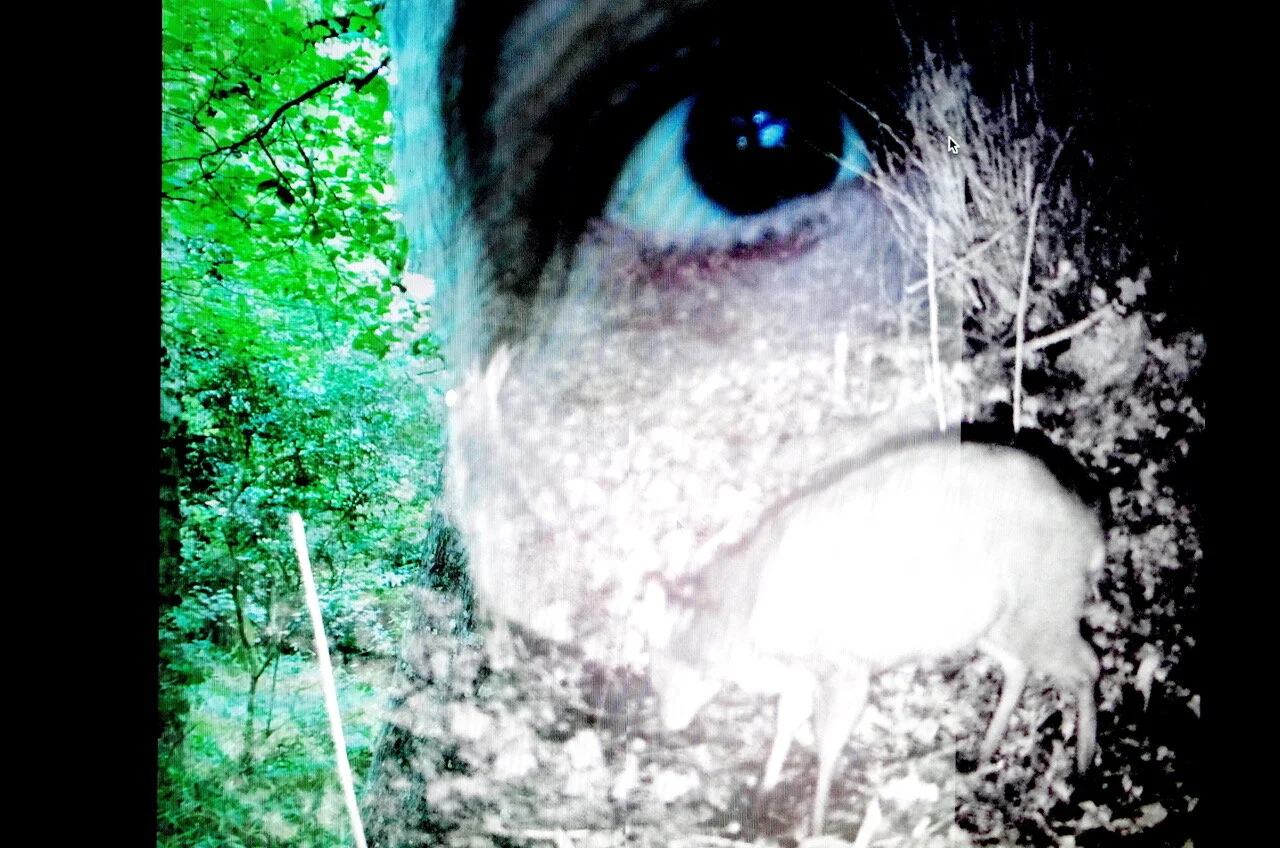
The Eye of the Forest (James Aldridge)
This month, I spoke with contemporary artist James Aldridge about his interest in climate and biodiversity, participatory art, the Climate Museum UK, and one of his newest projects, Queer River. Take a look!
1. How would you describe your arts practice?
My practice focuses on using visual arts processes to set up a dialogue between myself and other people, animals, plants and places. I’m interested in the value of such processes for the development of ways of being with each other, that are based on interconnection, and individual/planetary wellbeing.
2. Where does your interest in climate and biodiversity come from?
I’ve always used art as a way of exploring the relationship between humans and other beings. So as the magnitude of the current earth crisis became apparent, it made sense for me to be more explicit, advocating for arts practices that engage communities in talking about the crisis, and taking action to mitigate its effects.

Walking Pages (Stanton St Bernard)
3. What are your interests in interactive and participatory art?
My work combines individual, collaborative, and socially engaged practices. During my career I’ve worked with a wide range of organisations, and participants from babies to PhD students, researching the value of art within learning, and more specifically within outdoor and place-based learning. I see art as a living, breathing process, with art objects as evidence of that process.
4. What's your relationship with nature?
That's a bit of a tricky one… the word ‘nature’ itself is difficult for me. It is used by lots of people who are doing really positive work and inspiring others to do the same, and yet for me it perpetuates the idea of there being a human/nature split, an ‘us and them’.
Obviously when people are talking about ‘saving the environment’ or ‘being in nature’, their intentions are good, but they are acting from the same position that allows us to use and abuse ‘nature’, a belief that we are somehow separate. I believe that we are ‘nature’, and that sometimes art can give us an opportunity to experience that interrelationship, our indivisibility. Having said all that, I appreciate it’s not always easy to find another word to use.
5. What is the Climate Museum?
Climate Museum UK is a mobile and digital museum, a distributed museum consisting of a team of artists, designers, curators and others, based around the UK, who work together to enable other organisations and communities to talk about and take action on the earth crisis.
Climate Museum UK was set up by Founding Director Bridget McKenzie, and I was invited to join the team as an Associate about 18 months ago. During my time with CMUK I’ve worked with the Hayward Gallery to run workshops for children and teachers at the Among the Trees exhibition in early 2020, and developed online events and resources in collaboration with other team members. (Climate Museum is a different museum based in New York).

CMUK Workshop at Hayward Gallery
6. What is Queer River?
Queer River is an arts-based research project that I’ve set up to explore my and others experiences of and perspectives on rivers. I’m interested in how Queer perspectives, that sit across or outside of binary divisions such as masculine/feminine, can enable us to see beyond other boundaries such as human/nature or water/land, can provide us with new ways of seeing and being with rivers.
During the length of the Queer River project I will be walking, talking and making with other artists, writers, researchers and members of the LBGTQ+ community, along two rivers that start their journey near to my home in Wiltshire, the Hampshire Avon and the Bristol Avon. Together we will explore the intersection between our experiences, our practices and our ways of knowing rivers. From there I’m planning on widening the work to include other rivers and river ‘experts’.

Queer River, Paper Boat
7. What materials do you work with?
I like to allow the subject matter to inform the materials that I use. Often I am documenting my experiences of different places, and to do this I use sound, video, drawing, writing or photography, or make one of my Walking Bundles, from materials gathered along the way. Commissioned or other exhibited work can take the form of video or photographic pieces, sculptural installations, or writing, and much of my work is participatory in some way.

Walking Bundles (Doll Bodies)
8. What's one of the most memorable projects you've ever worked on?
The Interbeing exhibition that I set up at Pound Arts in Corsham in early 2020 was an important experience for me for both professional and personal reasons. It was the first exhibition that I had been involved in since a period of professional development supported by an A-N bursary, including mentoring from Rosalind Davis, and it was the first time that I had exhibited with my husband, the artist Jonathan Mansfield.
Together we set up an exhibition that explored the concept of Interbeing, as developed by Thich Nhat Hanh, and ran events to engage people in discussion around the themes of the exhibition. It’s that kind of approach that excites me, one that combines research and making with talks, walks and discussions. I’m not keen on just leaving my work at an exhibition and walking away, I want to learn and develop from the experience, and hear from the people that come to see it.
9. What's the one piece of art you'd love to make, but haven't yet?
At the moment my focus is on my Queer River work. It’s new and I’ve some really interesting people lined up to work with me. It’s exciting because it’s something I’ve set up for myself and it can go in whatever direction it needs to, from river restoration and rewilding, to health and wellbeing, or performance art. It’s designed to be fluid and responsive, and I’m looking forward to being surprised and educated by where the rivers and my collaborators take me.
10. What's your favourite part of the creative process?
It’s hard to separate out any one part. I enjoy the planning, the moment when I come together with others and the ideas and inspiration start flowing. And as the work starts to evolve, I enjoy the experience of having a loose focus, allowing it to go where it needs to. Each project or residency is a learning process, learning through dialogue, through relationship, discovering your true nature through creative interaction with human and non-human others.
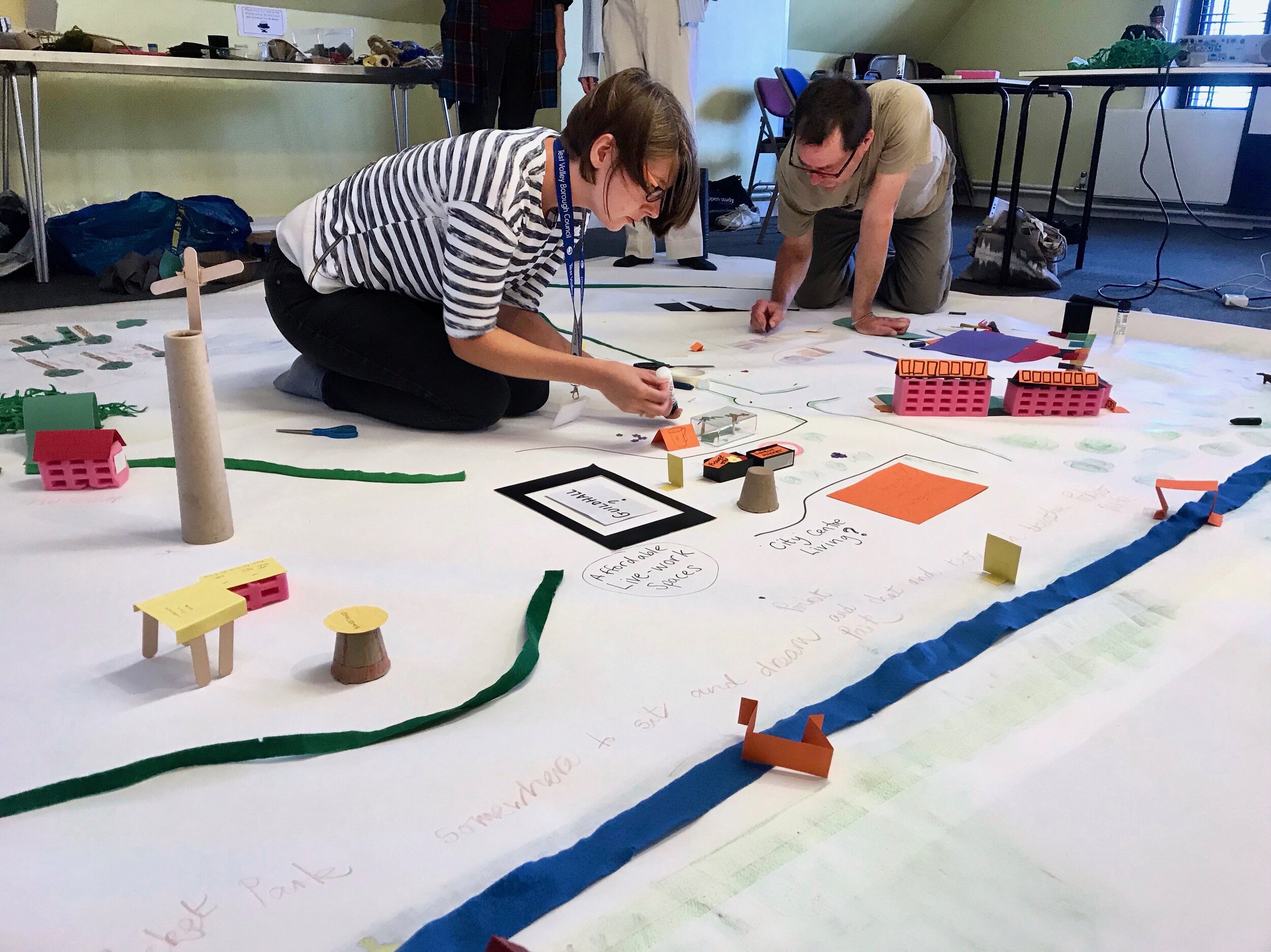
Mapping the Future Workshop (Asking Andover Residency)
11. What’s the best piece of advice you ever received?
This isn’t something that anyone has actually said to me, it’s more something that I’ve learned along the way, and that is to be yourself, as fully as you’re able.
There’s so much pressure, starting at art college, then all the way through your career, to make particular kinds of work or to use a particular kind of language, in order for your work to be noticed by the ‘right’ people.
For me, the learning that I take away from Queer River and all the research that I’ve carried out before it, is that each of us brings a unique and much needed perspective to our work and our relationships. Being different, being queer, can be hard, but if you can come through the hard bits, it can also give you a unique and valuable perspective on the world.
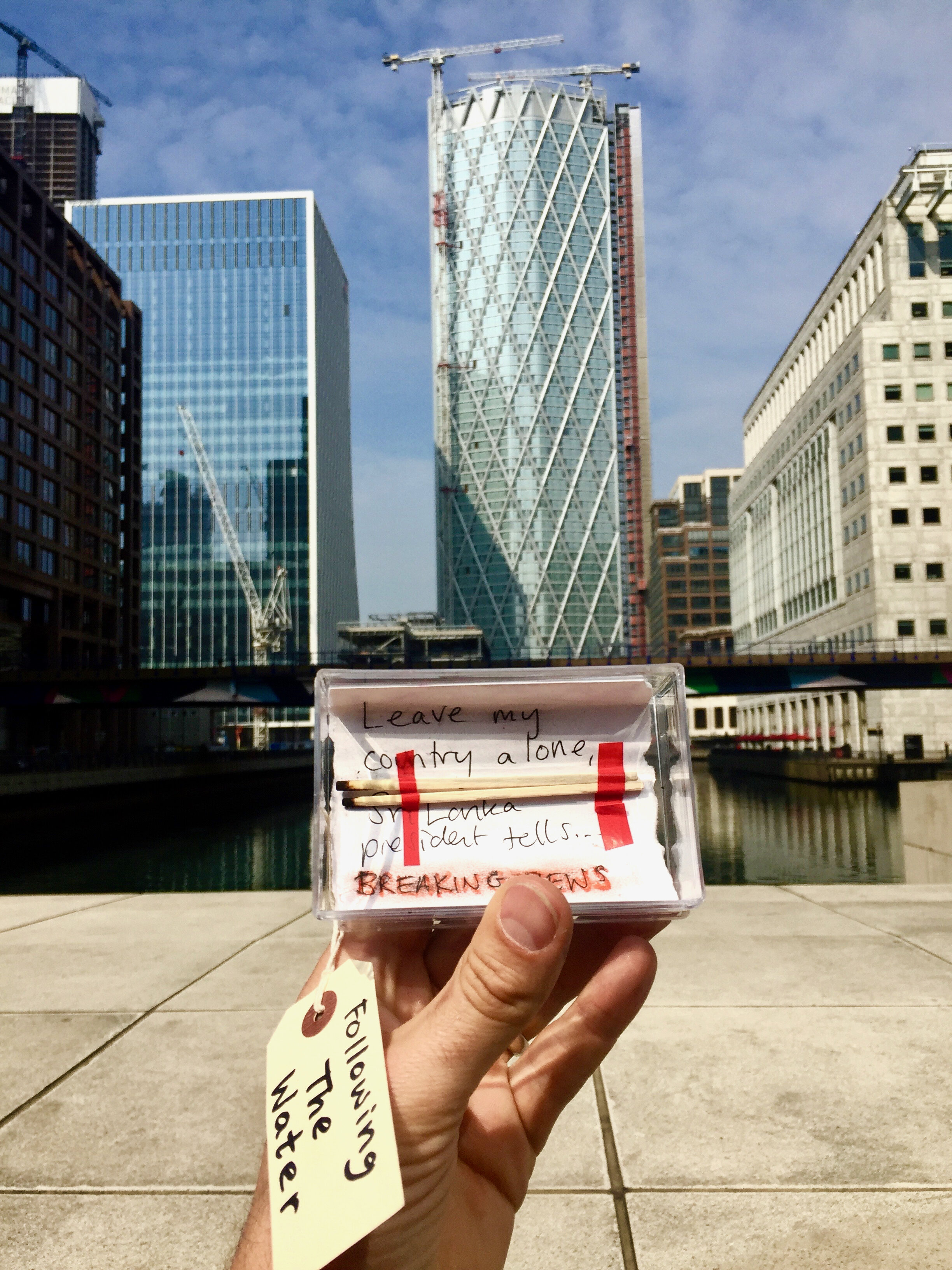
Following the Water (Urban Rural Exchange with Karen Wood)
Thank you for reading. For more information about James’ work and some of the projects named above, visit:
Stay tuned for more 11 questions with artists, makers and creatives coming your way soon. Never miss an issue by subscribing to my mailing list, and in the meantime feel free to take a look at my blog and some of my work as an artist.

11 questions with Sophie Dumaresq
I’m very excited to be able to kick off the new year with an interview with the incredibly talented Sophie Dumaresq, who talked to me about her mesmerising work as a visual artist. Based in Australia, Sophie’s vibrant art spans from new media robotics and photo media to large and small scale sculptural installations. ‘Her work explores symbiotic cycles of consumption, destruction and creation demonstrating how as a species we relate, show empathy and evolve with and within our surrounding environment’.

Hello 2021. I’m very excited to be able to kick off the new year with an interview with the incredibly talented Sophie Dumaresq, who talked to me about her mesmerising work as a visual artist. Based in Australia, Sophie’s vibrant art spans from new media robotics and photo media to large and small scale sculptural installations. ‘Her work explores symbiotic cycles of consumption, destruction and creation demonstrating how as a species we relate, show empathy and evolve with and within our surrounding environment’. Read her inspiring 11 answers below!
Why hair?
I started to experience hair loss due to endometriosis and changes within my environment. I started to collect the hair not only from my self but also from other womb carrying humans. I also started doing research into possible relationships between exposure to toxins within the environment, the female sex reproductive system and the physical make up of hair itself as well as its symbolism. I found it fascinating that the nitrogen bonds in hair make it a wonderful fertiliser for soil while also being use historically as symbol of fertility and womanhood. Its symbolism and practical use in my work has further evolved but in my earlier works it very much was an exploration of the materiality of what it is to feel alien and toxic.
What's your relationship with nature?
Complex yet filled with love, but I do get frustrated when people place nature on a pedestal as being somehow separate from the human animal when we are part of it, warts and all. My work often stems from this frustration that things somehow need to be perfect to be worthy of our love. As an artist, the materiality of our world I find is my outlet for being able to love while acknowledging the good and the bad that come with all things.
What is The Hairy Panic?
So the Hairy Panic itself is a nickname for Pancium effuse which is a native species of “weed” here in Australia. It is toxic for livestock. In 2016, it invaded and brought the town of Wangarratta to a standstill.
My Hairy Panic tumbleweeds, named after the “weed” are large hand made pink tumbleweeds make out of fencing wire and chemically processed and dyed human hair that I then installed and photographed out on a cattle farm. I think what first attracted me to the project as a white, non indigenous Australian was when I read that the original Hairy Panic was described as being a “native weed.” I couldn't stop thinking about how can something be native but also a weed? It got me thinking about who decides when something is “toxic” or a “weed” and why.
The specific shade of pink of the tumbleweeds came from the colour of the pesticide Round up containing Monsanto Glyphosate that is still used here in Australia.
What's your favourite medium to work with?
Metal, there is something quite primal with an air of Frankenstein about it for me in the way it responds to heat and makes you aware of the particles in the air around you while you are working with it. I am at my happiest when soldering or sitting in a welding bay.
What's your favourite part of the creative process?
The actual physical act of making the sculptural works. While making the Hairy Panic, I spent weeks just sitting silently welding together the fencing metal or brushing and braiding together the hair. A couple of friends joked about me going insane but I think it was the most sane that I’ve ever felt during a project. That’s also I guess what someone who had actually gone insane would feel, so who knows.
What are you currently working on?
I’m currently collecting resources for my next big project while doing a commissioned collaborative work. I did just finish a recent project done on work by Australian environmental conservationists with endangered shore birds.
It was based on the use of human hair in socks as a more humane pest control measure against foxes. The scent of the human from the hair acts as a deterrent to the foxes to keep them away from the nests. For the project I made a series of images around the symbolism of the fox, my own white colonial heritage and the socks that I then created from human nursery fleece and human hair.
What's the one piece of art you'd love to make, but haven't yet?
The project I am collecting hair and metal to work on for next year. It is another sculptural land art installation similar in scale and aesthetic to my previous work “The Hairy Panic” but closer to my baby pink human hair wearing robotic cow skull “She” in themes of materiality.
If you could pick one person to collaborate with, dead, alive, or fictional who would it be?
David Lynch, I have the upmost respect for his creative process in terms of his belief in the power of the day dream and then how we go about materialising those images into the world. There is also just something about his ability to make the romantic ugly and in turn the ugly romantic.
What’s the best piece of advice you ever received?
I guess as an artist or creative, if you enjoy the meme, make sure you're putting in the time to actually read and understand the theory behind it. Which to me pretty much comes down to putting in the time to learn about the work of those who came before you and the heritage of your shared concepts and ideas. It doesn’t have to mean becoming an academic but for me it helped me feel less lonely within my art practice which I found helped dealing with things like imposter syndrome and that crippling sometimes paralysing doubt that most creatives experience at least once during the making process.
What's the one object you'd bring to a desert island?
It is a little boring but I think Heritage seeds for the win. One of my favourite authors is Octavia E Butler and if her Parable novels have taught me anything, it is that being able to grow your own food is essential. I can always break off a branch or find a rock to sharpen to use as a weapon and or tool once I am there.
What's your one message to the world?
Be active and curious about the world and don’t just listen to those who make you feel comfortable about your position within it.
Thank you for reading. Stay tuned for more 11 questions with artists, makers and creatives coming your way soon. Never miss an issue by subscribing to my mailing list, and in the meantime feel free to take a look at my blog and some of my work as an artist.

11 questions with Fern Shaffer
For my newest interview, I had the pleasure of speaking with the incredible Fern Shaffer, who works as a painter, performance artist, lecturer and environmental advocate. Fern’s work began in conjunction with an emerging Ecofeminism movement, which brought together environmentalism, feminist values and spirituality to address a shared concern for the Earth and all forms of life.
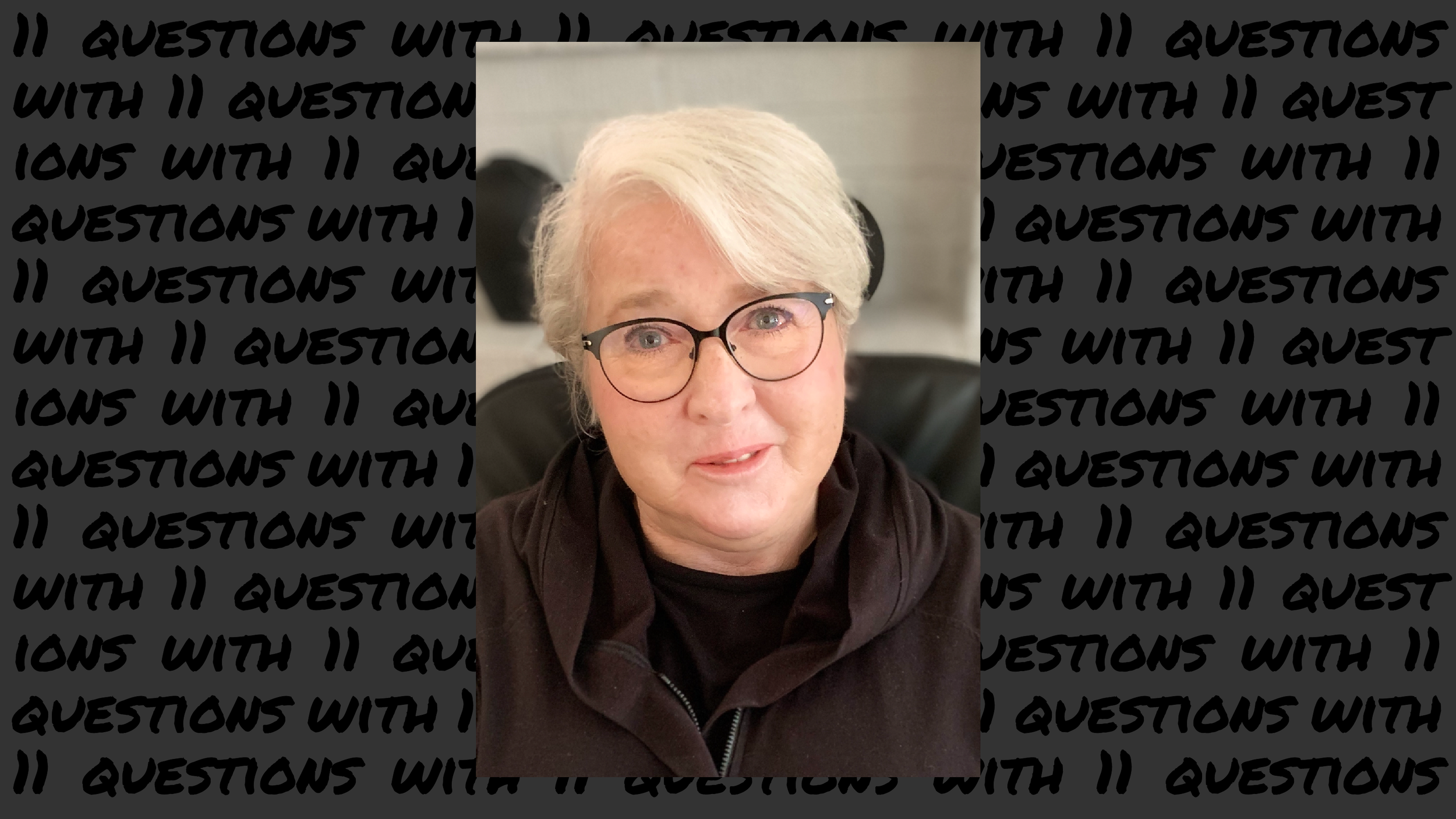
For my newest interview, I had the pleasure of speaking with the incredible Fern Shaffer, who works as a painter, performance artist, lecturer and environmental advocate. Fern’s work began in conjunction with an emerging Ecofeminism movement, which brought together environmentalism, feminist values and spirituality to address a shared concern for the Earth and all forms of life. Read her inspiring 11 answers below!
1. What inspires you to make work?
I have a need to be creative and express what I am thinking. I chose visual arts to be my expression. I will think about a subject for example trees. Then comes the list of questions of how I am going to do it. I tried drawings and painting, and decided the question would be how to build a tree leaf by leaf and I chose the Ginkgo tree and leaves. I worked on this project for over 5 years. The final project was a 100 acrylic and oil stick 8 x 10 canvasses framed.

2. How did you become an artist?
I majored in art from High School through to College and a Master Degree. I painted all the time or created art in different forms. When I joined Artemisia Gallery, I knew that I was an artist and was President of this woman run alternative gallery for 12 years. I work to support myself by teaching art and working with the elderly.
3. What was the first piece of art you created?
I was very young, about 6 or 7. I drew a plate with many colors on it in Crayola and knew that art must be a part of my life.
4. What's your relationship with nature?
I love nature and as a young child our family camped. I am interested in Science and Nature and how we live on this planet.
5. What are the Nine Year Rituals?
I worked with Othello Anderson for many years and we did rituals to heal the earth. We decided to do a ritual that would take 9 years as a deeper commitment to the rituals. 9 is a healing number and we followed a pattern using the number 9. All the rituals were performed on the 9th day of the month and at 9 am. The ritual took place all across the Northern Hemisphere starting on Jan. 9, 1995 through Sep. 9, 2000. Each location was a symbol for the issues that were affecting our environment. Old Growth Forests, Swamps, Filling in Valleys by blowing up mountains to gain coal, and Oceans, Streams and Rivers, Growing Food as a few examples.
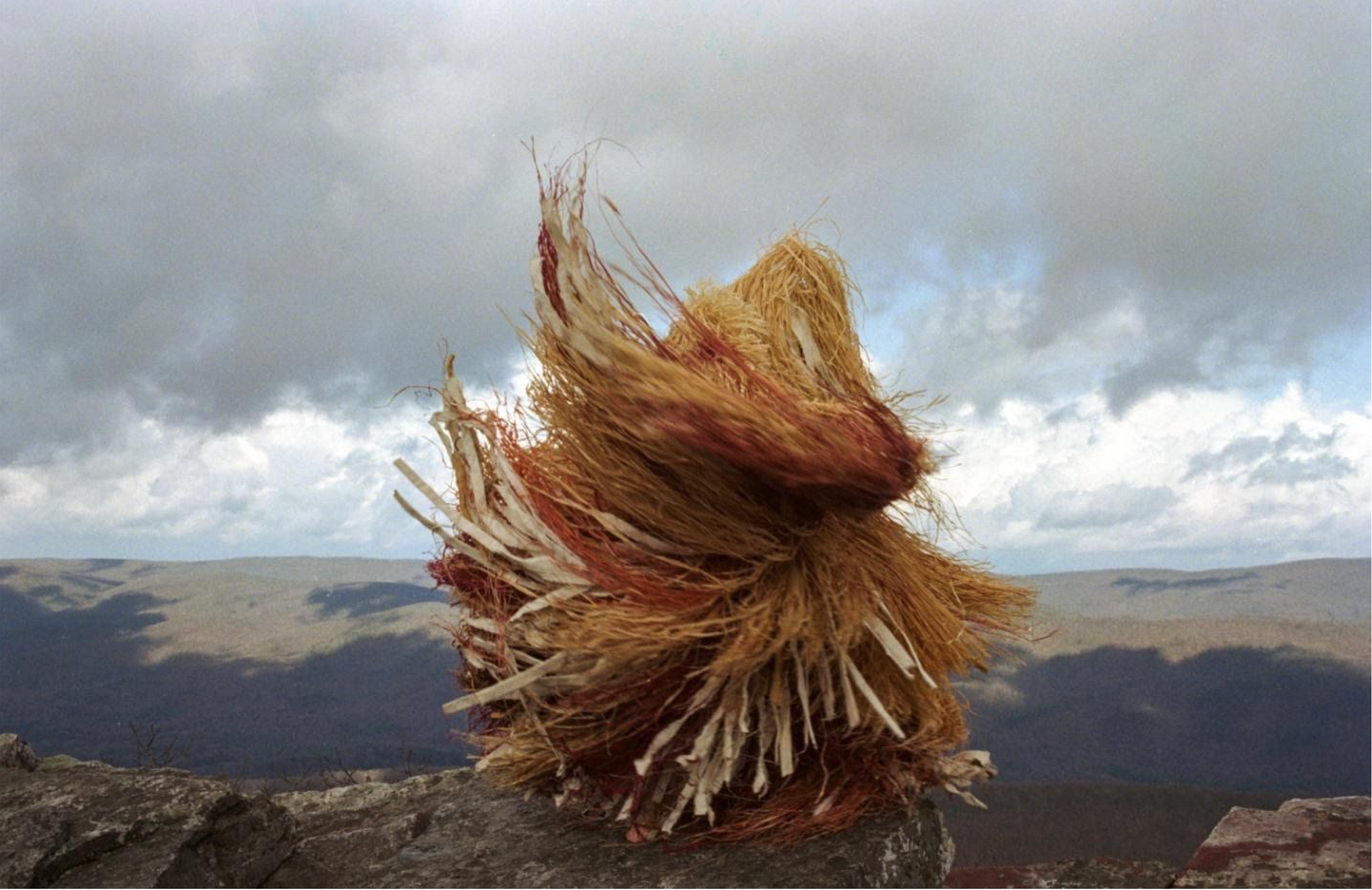
6. Which was one of your favorite performances you made?
I loved the Swamp, the 9th ritual. It was a very magical feeling being in the water in a swamp that was very old. You can tell by the size of the trees.

7. What does ecofeminism mean to you?
This is the definition of ecofeminism that means the most to me: Ecofeminism is a branch of feminism that sees environmentalism, and the relationship between women and the earth, as foundational to its analysis and practice ...
8. What's your favorite art form or medium to work in?
I have no favorite. The subject or the idea I want to convey sometimes takes a lot of experimentation to make the subject I want to feel right to what I am thinking. Sometimes it is watercolor, or oil stick or acrylic or color pencils.
9. What's your favorite part of the creative process?
Experimenting, finding new materials, working in various medias, researching the whole creative process. Solving problems.
10. What's your one message to the world?
We must be kind, help each other and be sensitive to where we live.
11. What's the one object you'd bring to a desert island?
Sea plane with instructions.
Thank you for reading. Stay tuned for more 11 questions with artists, makers and creatives coming your way soon. Never miss an issue by subscribing to my mailing list, and in the meantime feel free to take a look at my blog and some of my work as an artist.

11 questions with Dr Pogus Caesar
For my next interview, it’s been an absolute honour speaking with Birmingham-based photographer Dr Pogus Caesar. His incredible career includes his work as a conceptual artist, curator, television producer and director, archivist and writer, but it may be his photography for which the artist is most renowned.

For my next interview, it’s been an absolute honour speaking with Birmingham-based photographer Dr Pogus Caesar. His incredible career includes his work as a conceptual artist, curator, television producer and director, archivist and writer, but it may be his photography for which Pogus is most renowned. In black and white, he captures key moments and figures across history, images that are as mesmerising as they are incisive. Take a look at his 11 answers!
1. What are you working on at the moment?
At present, I am working on a couple of artworks that reflect my current position - these past months have provided much inspiration. One artwork is entitled Imperfect Wings: 2020, an evolving work eventually completed this year. I used basic household materials: cotton, resin, leather and paint on board. It was then placed outside and nature did the rest. Dimensions 17 x 26 in.

Imperfect Wings: 2020 © Pogus Caesar
Also, I'm collating a number of archival photographs from the "Schwarz Flaneur" series for a new book.

Prince Joseph: Margarita Island, 1991 © Pogus Caesar/OOM Gallery Archive. All Rights Reserved, DACS/Artimage 2020
2. What's been one of the most memorable moments you captured on camera?
This is a difficult question to answer. I'd like to think that most of the photographs I've taken have been memorable in some way. However, the moment that has effected me most is the 1985 Handsworth Riots, bearing witness and documenting the unfolding situation is something you never forget.
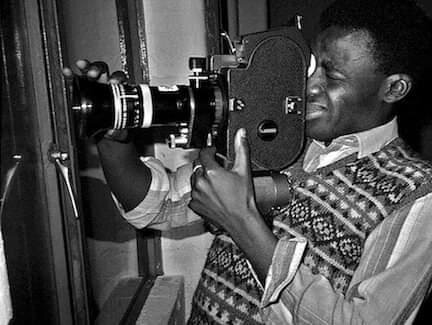
John Akomfrah: Handsworth, Birmingham, UK, 1985 © Pogus Caesar/OOM Gallery Archive. All Rights Reserved 2020
3. Who's been one of the most memorable people you captured on camera?
One of the most memorable people I've photographed is Desmond Tutu, his visit to Birmingham in 1989 really lifted the spirit of those he engaged with.

Desmond Tutu: Birmingham, UK, 1989 © Pogus Caesar/OOM Gallery Archive. All Rights Reserved, DACS/Artimage 2020
4. Why do you think it's important to look back at history?
Looking back into history can undoubtedly reveal long forgotten portals to the present and future.
5. What was one of the first photographs you’ve ever taken?
The first photograph I can recall being proud of was taken during a visit to New York. It featured a giant circular saw digging up the streets. The series, entitled "Instamatic Views of New York", was eventually exhibited at the National Museum of Photography Film and Television, Bradford 1986.
6. When did you realise you were an artist?
Realising that I could create art came early, however It was one of those things you kept to yourself. It was not seen as a viable profession.
7. What's one of your biggest challenges as a photographer?
One of the biggest challenges is when to take a photograph as I still use 35mm film. There are 36 frames with no delete facility.

Image © Brian Benson
8. What inspires you to make work?
Inspiration presents itself in a multitude of forms, there are no rules and regulations. Each piece of work produced inspires me to keep pushing and be fearless. The only person to stop you is you! Expanding the mind provides countless creative opportunities.
9. What's been your favourite country to visit?
My favourite country to visit was South Africa, it really opened and expanded my vision like never before.

Within Seconds: Newtown, Johannesburg, South Africa, 2007 © Pogus Caesar/OOM Gallery Archive. All Rights Reserved, DACS/Artimage 2020
10. Where would you love to visit next?
I would like to visit rural China and see what images would be presented to my lens.
11. What’s the best piece of advice you ever received?
There have been numerous pieces of advice given, the one I tell myself is "keep going as you can't turn back the hands of time".

Woman: 1985 © Pogus Caesar/OOM Gallery Archive. All Rights Reserved, DACS/Artimage 2020
Thank you for reading. Stay tuned for more 11 questions with artists, makers and creatives, all coming your way soon. Never miss an issue by subscribing to my mailing list, and in the meantime feel free to take a look at my blog and some of my work as an artist.

11 questions with Maria Slovakova
For the second interview of my new series, 11 questions with, I caught up with contemporary artist Maria Slovakova, whose vibrant art brings joy to my heart whenever and wherever I spot one of her beautiful pieces. Here are her 11 answers. Enjoy!
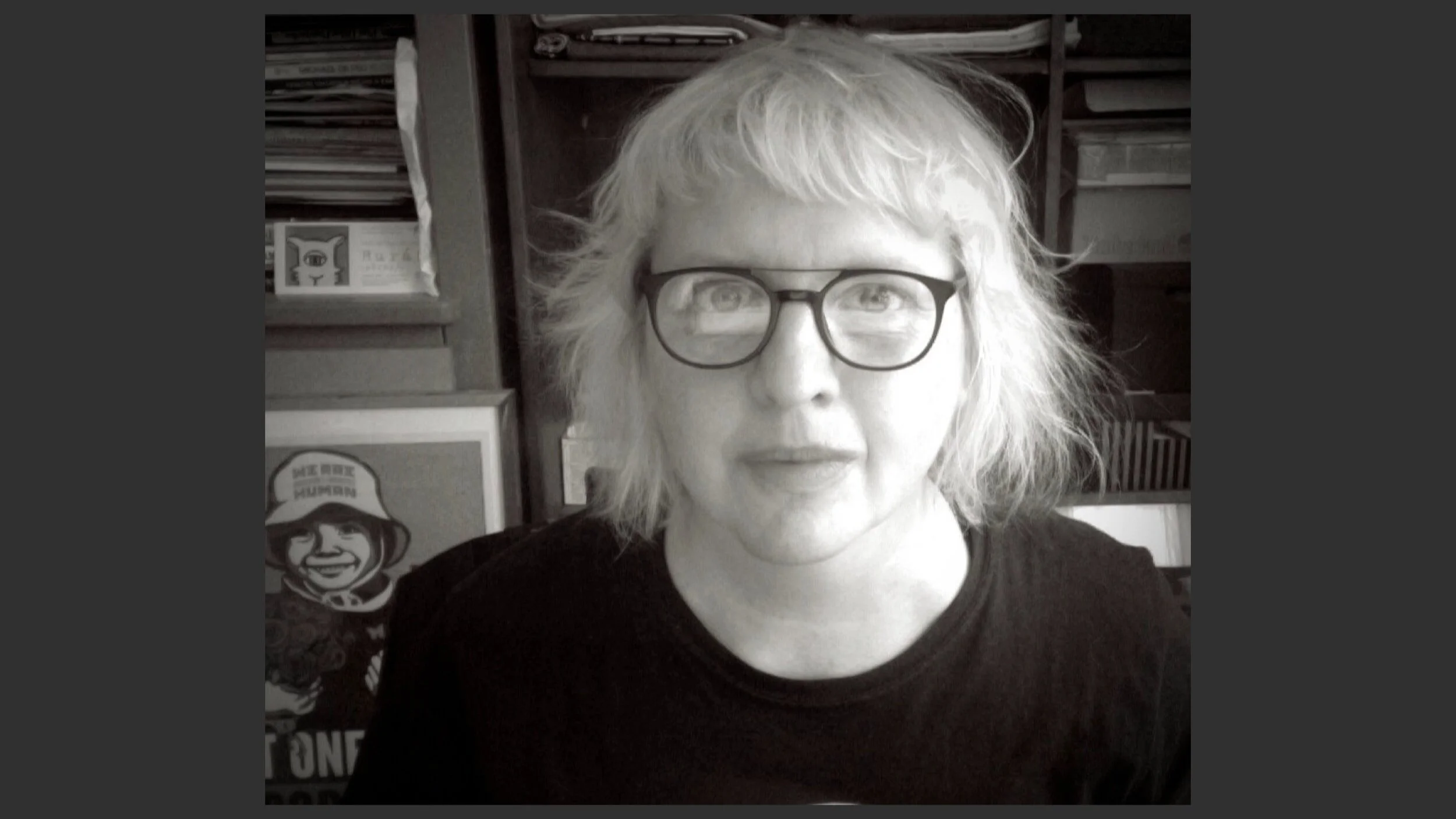
For the second interview of my new series, 11 questions with, I caught up with contemporary artist Maria Slovakova, whose vibrant art brings joy to my heart whenever and wherever I spot one of her beautiful pieces. Here are her 11 answers. Enjoy!
What are you making these days?
For the last month, I’ve been busy creating a small product collection to present this winter, as well as making new paintings and drawings…quite a lot of new creatures came to mind this spring, so working with them to appear on all different surfaces.
Where are you making it?
At my studio
If you could pick one person to make art with, dead or alive, who would it be?
I would love to spend time with Diego Velázquez. His work fascinates me.
What's your superpower?
Patience.
What's been your favourite project you ever worked on?
Hand painting a GMC van for Baldwin Baldwin at a local garage while the mechanic was fixing a tractor. That was in Eastern Townships in Quebec, Canada. It was so much fun.
What's been the most challenging project you ever worked on?
Certainly ‘Be nice’ wall at Trencin airport during Pohoda festival in 2006, it was the first mural of that scale (cca 4m x 2.5m) I did on my own and in front of people. Plus that wall surface was built at an angle…so I had to kind of lay on the ladder…it was bit of a tricky one to work out. But I got it right in the end.
What's your guilty pleasure?
Cookies.
What's the one object you would bring to a desert island?
Carving knife. So I would have no excuse anymore to make the sculptures I’ve talked about for all these years.
Have you ever destroyed a piece of art?
No.
What’s the best piece of advice you ever received?
‘Find the right technique for the idea or the concept that you have in mind.’
What inspires you?
I keenly observe the human ways of living life as well as nature systems…I love how both organisation and chaos of what we live like can bring you moments you could never invent. I reflect on this when I write poetry. That, and love and emotion. :)
In visual art, most of the characters come to paper spontaneously, I have no control over the moment they happen to arrive. Images used to pour out of me, now I have a bookcase shelf filled with sketchbooks that I go back to, in search of inspiration, whenever I need to. I try to keep the flow and focus going, when I do not draw or paint, I create digital images or write. To me, inspiration comes with the ability to focus and tap into the subconscious tv I carry within my mind.
I hope you enjoyed the second interview in the series. Stay tuned for more interviews with artists, makers and creatives coming soon. Never miss an issue by subscribing to my mailing list, and in the meantime feel free to take a look at my blog and some of my work as an artist.
11 questions with Anna Moranda
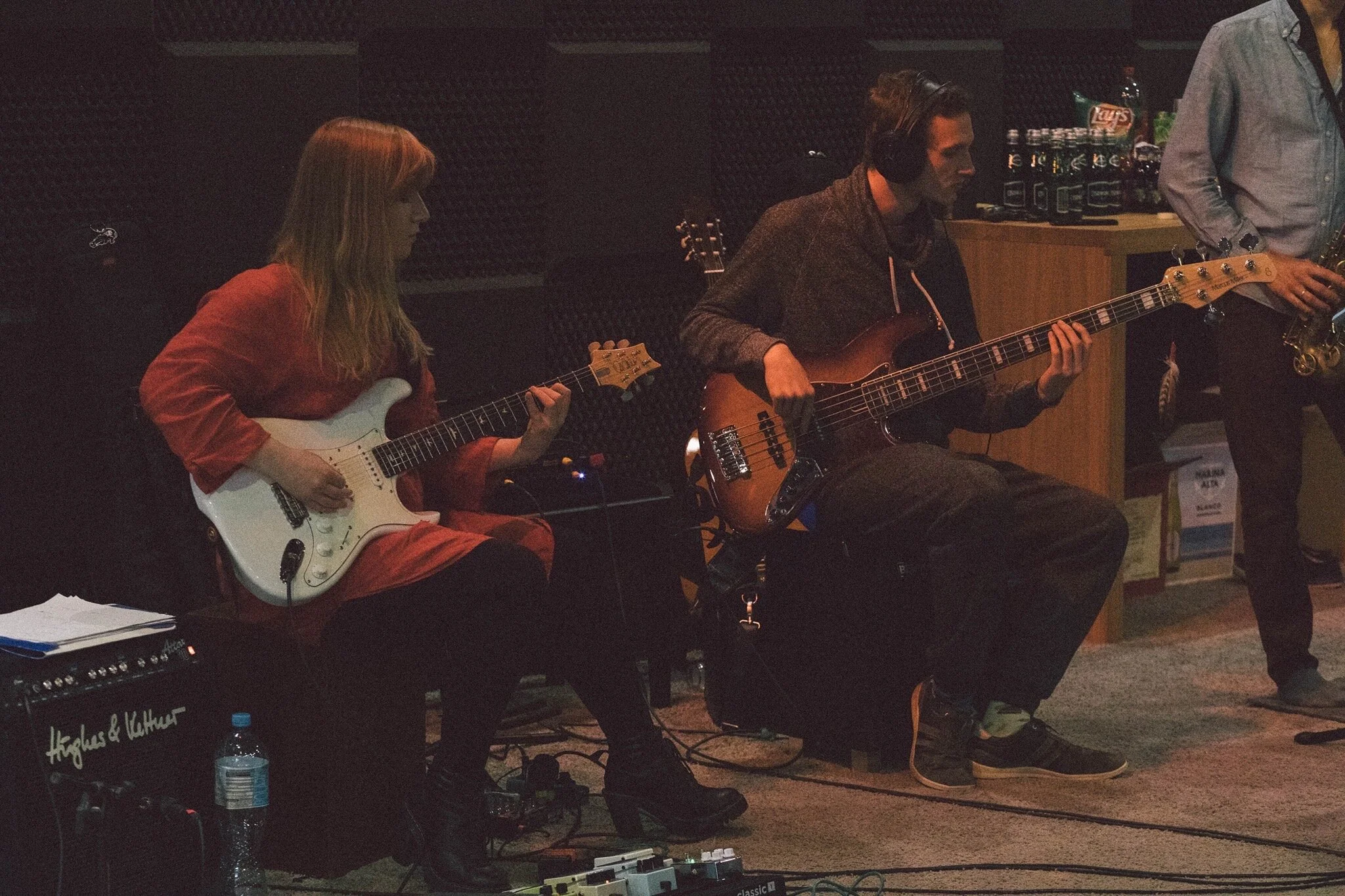
In a fresh new series of interviews, 11 questions with, I'm speaking with artists, makers and creative industry professionals about their work, their lives and what drives them. For my very first one, I had the pleasure of speaking with the incredibly talented Anna Moranda, who works as a guitarist, singer and writer. Read her 11 answers and enjoy!
In a fresh new series of interviews, 11 questions with, I'm speaking with artists, makers and creative industry professionals about their work, their lives and what drives them. For my very first one, I had the pleasure of speaking with the incredibly talented Anna Moranda, who works as a guitarist, singer and writer. Read her 11 answers and enjoy!
What are you working on these days?
Since the pandemic has severely limited my options, I’ve been focusing on songwriting and arranging. Recently, I’ve been working on different vocal arranging techniques, expanding my knowledge, and exploring my voice and creativity in a brand new way. There’s always more to learn, more to discover, but I love the process all the same.
If you could pick one person to work with, dead, alive or fictional who would it be?
Prince. Not only was he a very prolific songwriter and producer, but also a great guitarist, and a very entertaining showman.
If your life was a song, what would the title be?
Broken Hearts Anonymous.
What's your favourite music to listen to?
My favourite music completely depends on the mood I’m in. One day it could be some laid back R’n’B or neo-soul, and another day it could be nu-metal or 80s synth-pop. I do have a preference for guitar music, though, regardless of the genre.
What's been your favourite project you ever worked on?
This summer I’ve recorded an online gig with my band Zouzy for Babaco.live (it’s a new streaming service that offers online concerts by various artists). We were playing without Maja, our keyboard player, and I was the only one with an instrument that could play harmonies. There was a lot of work with arranging songs for acoustic guitar, but it definitely expanded my imagination in terms of song arrangement. When you cannot rely on electronic musical instruments or loops, your options are limited, but creative constraints are actually good in music. What I’ve learned is, if you only have six strings at your disposal, you have all you need to make good music.
What inspires you?
My teachers. Their work ethic, the way they look at life and art. But also the people I know; their stories, their heartbreaks, their journeys.
What's the one object you would bring to a desert island?
A knife. I believe a guitar wouldn’t necessarily help me survive on a desert island.
What's your favourite part of the creative process?
The invention. Coming up with ideas. In fact, I have one notebook for lyrics and a separate one for song arrangement ideas. Now, the matter of executing these ideas may be a challenge. Sometimes I do not have the tools or the knowledge (yet) that is necessary to carry them out. There's always an element of surprise, and I enjoy that part.
I also love the rare moments of inspiration when the lyrics and melody come together, and I don’t have to force it, it just happens naturally. It is extremely rare but when it happens, it feels like soaring.
What’s the best piece of advice you ever received?
Stop beating yourself up. Let yourself go, sometimes.
What's your superpower?
I can tell when someone's lying or hiding something. I’ve learned to trust my gut; if something feels off, it probably is.
What's your favourite way to relax?
Working out, actually. It definitely helps with overthinking, and as a creative person, I am an overthinker. After a training session, I’m simply too exhausted for that, and I can completely relax. Also, I wouldn't say no to a glass of good wine and an aesthetically pleasing film.
Thank you for reading and I hope you enjoyed the first interview in the series. Stay tuned for more interviews with artists, makers and creatives coming soon. Never miss an issue by subscribing to my mailing list, and in the meantime feel free to take a look at my blog and some of my work as an artist.